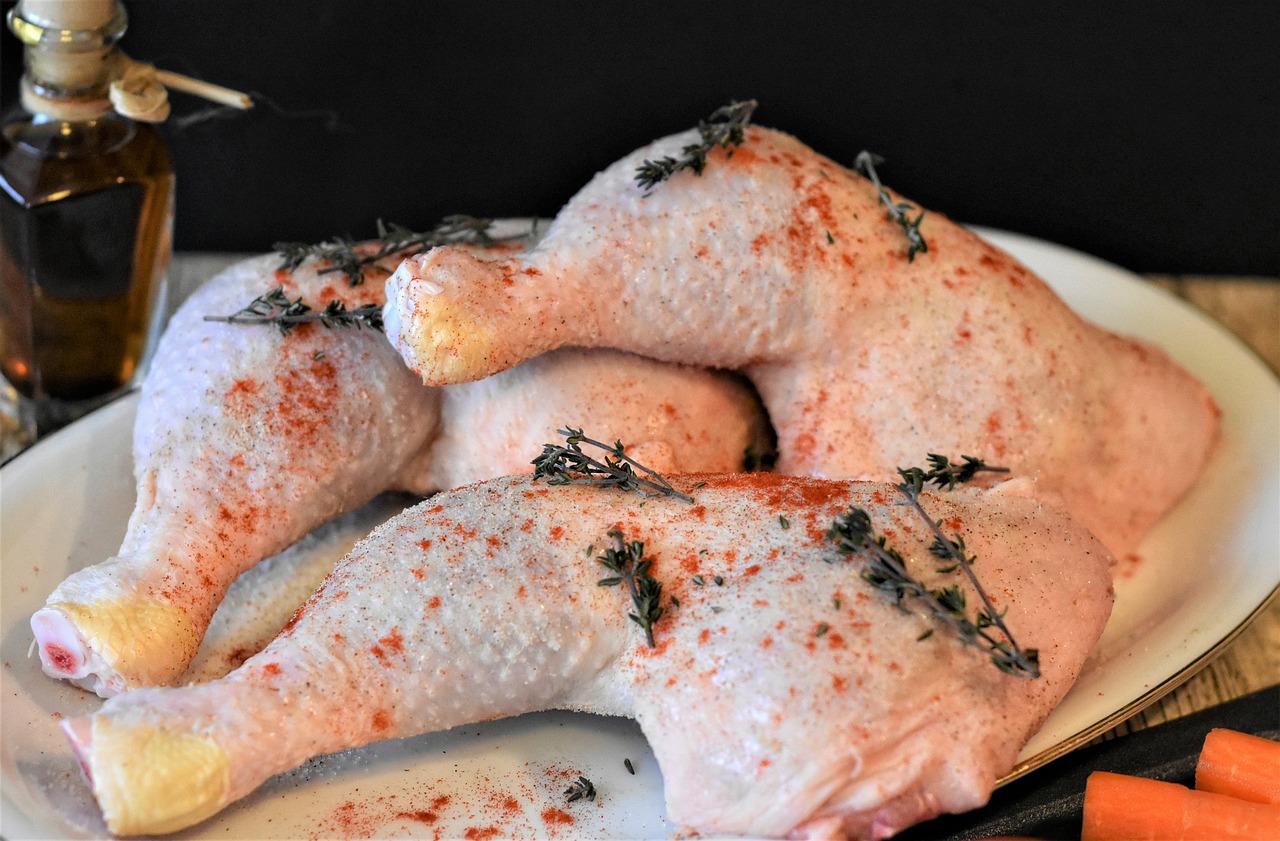
How to Cook Chicken Safely
Chicken is one of the most commonly prepared sources of protein, but raw poultry can carry harmful bacteria that may cause foodborne illness if it is handled, stored, or cooked incorrectly. Safe chicken preparation depends on more than looking at the outside of the meat. The most reliable way to determine whether chicken is safely cooked is to measure its internal temperature with a food thermometer.
For poultry, the key safety target is an internal temperature of 165°F (74°C). The temperature should be checked in the thickest part of the meat and, when applicable, in several locations because different parts of a chicken can cook at different rates. Color, texture, cooking time, and appearance can provide clues, but they should not replace temperature measurement.
This guide explains how to cook chicken safely, how to use a food thermometer correctly, why cooking times vary, how to handle raw chicken, how to prevent cross-contamination, how to store leftovers, and what common mistakes can increase food-safety risks. It is designed to help home cooks build a practical routine that works for whole chickens, breasts, thighs, wings, drumsticks, ground chicken, and other poultry preparations.
Why Chicken Food Safety Matters
Raw chicken can contain disease-causing microorganisms. These microorganisms may be present even when the chicken looks fresh, smells normal, and has no visible signs of contamination. Refrigeration slows bacterial growth but does not make raw poultry sterile. Proper cooking is therefore an important control step.
Foodborne illness can cause symptoms such as nausea, vomiting, diarrhea, abdominal discomfort, fever, and dehydration. Some infections can be more serious, particularly for young children, older adults, pregnant people, and individuals with weakened immune systems. Safe food handling reduces the chance of transferring harmful microorganisms from raw chicken to hands, utensils, cutting boards, countertops, and ready-to-eat foods.
Cooking chicken safely involves several separate steps: buying and transporting it safely, refrigerating or freezing it correctly, preventing cross-contamination, cooking it to the appropriate internal temperature, handling leftovers properly, and cleaning equipment after preparation.
The Safe Internal Temperature for Chicken
The most important temperature to remember when cooking chicken is 165°F (74°C). This is the commonly used food-safety endpoint for poultry. A food thermometer should be inserted into the thickest portion of the meat without touching bone, because bone can interfere with an accurate reading.
For a chicken breast, insert the thermometer from the side into the thickest section. For a whole chicken, check the innermost part of the thigh and wing and the thickest part of the breast. If different parts show different temperatures, continue cooking until the relevant thick portions reach the safe temperature.
Temperature is more dependable than judging doneness from color. Chicken can remain slightly pink for reasons unrelated to unsafe cooking, while meat can appear completely white before it has reached a safe internal temperature. Use a thermometer whenever practical.
Why 165°F or 74°C Is Important
Cooking is a time-and-temperature process. Heat destroys harmful microorganisms when the food reaches an appropriate temperature for an adequate amount of time. The 165°F (74°C) target provides a practical household endpoint for poultry because it is easy to measure and apply across different cooking methods.
A thermometer reading tells you what is happening inside the chicken rather than only what is happening on the surface. A piece may brown quickly in a hot pan while remaining undercooked in the center. Conversely, a piece may look pale while already reaching a safe temperature.
Because cooking equipment, meat thickness, starting temperature, and portion size vary, there is no single cooking time that guarantees safety for every chicken preparation. The thermometer provides the final check.
How to Use a Food Thermometer Correctly
Using a thermometer is simple, but placement matters. Insert the probe into the thickest part of the chicken. Avoid touching bone, the cooking pan, or the thermometer probe against the surface because those locations may not represent the temperature of the meat's center.
For large or irregular pieces, take readings in more than one location. The goal is to find the coldest or thickest area. When cooking a whole chicken, check multiple portions because the breast, thigh, and wing areas do not necessarily heat at the same rate.
Clean the thermometer probe with hot soapy water before and after use, particularly when it moves from raw poultry to cooked food. A thermometer can become a vehicle for cross-contamination if its probe is not cleaned between uses.
Can You Tell if Chicken Is Done by Color?
Color alone is not a reliable food-safety test. Properly cooked chicken is often opaque and may have juices that appear clear, but these visual characteristics can vary. Some cooked chicken can retain a pinkish color, while some undercooked chicken may appear pale.
The same principle applies to texture. Firmness can suggest that chicken is cooked, but it cannot establish a specific internal temperature. A thermometer gives a measurable result and is therefore the better safety check.
Chicken Cooking Times Are Not Universal
Cooking time depends on the type and size of chicken, whether it is bone-in or boneless, the starting temperature, the oven or pan temperature, the cooking method, and the amount of food being prepared. A thin chicken breast can cook much faster than a thick bone-in piece.
Oven temperatures can also vary between appliances. Two ovens set to the same temperature may have different heating patterns, and opening the door frequently can affect cooking speed. Pan size, air circulation, and the amount of food can influence the result as well.
For these reasons, published cooking times should be treated as guidance rather than a substitute for checking internal temperature. Start checking near the expected end of the cooking period and continue until the chicken reaches 165°F (74°C).
How to Cook Chicken Breast Safely
Chicken breasts are often relatively lean and can become dry if overcooked. Their thickness is particularly important because a thick breast may take considerably longer to reach a safe internal temperature than a thin or flattened breast.
When baking chicken breast, arrange the pieces so they have adequate space for heat to circulate. Begin checking the thickest piece toward the end of the expected cooking time. Insert the thermometer into the center of the thickest portion from the side.
If the breast has been pounded to an even thickness, it will generally cook more evenly. However, do not assume that an evenly shaped piece is safe after a specific number of minutes. Check the temperature.
How to Cook Chicken Thighs Safely
Chicken thighs contain more connective tissue and fat than breast meat and are commonly cooked until tender. Regardless of preferred texture, poultry safety still requires the appropriate internal temperature.
For bone-in thighs, place the thermometer into the thickest meat without touching the bone. Check several pieces if they differ significantly in size. Smaller pieces may reach the target temperature before larger ones.
Thighs are often forgiving when cooked beyond the minimum safety endpoint because their higher fat and connective-tissue content can remain pleasant at temperatures and cooking times that would make lean breast meat dry. Food safety and preferred texture are separate considerations.
How to Cook Chicken Wings Safely
Chicken wings are smaller than many other poultry cuts, but their irregular shape can make temperature measurement slightly more challenging. Insert the thermometer into the thickest meaty section while avoiding the bone.
If wings are cooked in batches, do not assume that every batch behaves exactly the same. Crowded pans, different piece sizes, and changes in oil or oven temperature can affect cooking speed. Verify the internal temperature of representative pieces, particularly the thickest ones.
How to Cook Chicken Drumsticks Safely
Drumsticks are bone-in pieces with relatively uneven shapes. Insert the thermometer into the thickest part of the meat without touching the bone. Rotate or reposition pieces during cooking when appropriate so heat reaches them more evenly.
Because drumsticks contain bone and connective tissue, visual appearance can change during cooking. Do not rely solely on whether the meat has pulled away from the bone. Measure the internal temperature instead.
How to Cook a Whole Chicken Safely
Whole chickens require extra attention because the bird contains several different sections that can heat at different rates. The thickest breast, innermost thigh, and wing areas should be checked with a thermometer.
Place the chicken breast-side up or according to the recipe's instructions and allow adequate space around the bird. Avoid packing the roasting pan so tightly that air cannot circulate.
Near the expected end of cooking, insert the thermometer into the thickest part of the breast and then into the innermost part of the thigh and wing. Avoid touching bone. If any relevant portion has not reached 165°F (74°C), continue cooking and check again.
When cooking a stuffed chicken, food safety becomes more complicated because the stuffing can also contain ingredients that require safe cooking. The center of the stuffing must reach a safe temperature as well. For easier temperature control, many cooks choose to prepare stuffing separately.
How to Cook Ground Chicken Safely
Ground chicken deserves careful handling because grinding can distribute microorganisms throughout the meat rather than leaving them primarily on the surface. Ground poultry should be cooked thoroughly.
Use a food thermometer to check the center or thickest portion of the ground chicken preparation. For chicken burgers, meatballs, patties, fillings, and similar foods, check more than one piece when sizes vary.
Do not judge ground chicken by browning alone. Ground meat can brown before the center reaches a safe temperature, particularly when the cooking surface is very hot.
Cooking Chicken in a Pan
Pan-frying and sautéing can cook chicken safely when the pieces are heated throughout. Use medium or appropriately controlled heat rather than relying on extremely high heat to finish the outside quickly.
For thick pieces, covering the pan for part of the cooking process can help heat the center, depending on the recipe. Turning the chicken allows more even exposure to the cooking surface. Check the thickest portion with a thermometer before serving.
If the outside is browning too quickly while the center remains below the target temperature, lower the heat and continue cooking. High surface heat does not guarantee rapid heating of the center.
Cooking Chicken in the Oven
Oven cooking is convenient for breasts, thighs, drumsticks, wings, and whole chickens. Preheat the oven according to the recipe, arrange the chicken appropriately, and avoid overcrowding when the recipe depends on circulating heat.
Use the recipe's estimated cooking time as a starting point, but check the internal temperature near the end. If the chicken has not reached 165°F (74°C), return it to the oven and check again after additional cooking.
Oven temperature should be measured accurately when possible. A malfunctioning or poorly calibrated oven can produce results that differ substantially from the selected setting.
Cooking Chicken on a Grill
Grilling can produce high surface temperatures, which means chicken can brown or char while the inside remains undercooked. Manage the heat carefully and use direct and indirect cooking areas when appropriate for thick pieces.
Use a thermometer in the thickest part of the chicken. If the exterior is becoming too dark before the center reaches 165°F (74°C), move the chicken to a cooler area of the grill and continue cooking.
Keep raw-chicken utensils separate from utensils used to handle cooked chicken. If the same tongs are used for raw and cooked food without cleaning, bacteria can be transferred back onto the finished chicken.
Cooking Chicken in an Air Fryer
Air fryers circulate hot air around food and can cook chicken efficiently. Cooking time varies according to the model, temperature setting, chicken size, and amount in the basket.
Avoid filling the basket so tightly that hot air cannot circulate effectively. Turn or rearrange pieces when the recipe calls for it. Near the end of cooking, check the thickest piece with a food thermometer and continue cooking until it reaches 165°F (74°C).
Do not assume that an air fryer recipe's stated time is universally accurate. Different air fryers have different heating patterns, and chicken pieces can vary considerably in thickness.
Cooking Chicken in a Pressure Cooker
Pressure cooking can heat chicken quickly and thoroughly when used according to the appliance manufacturer's instructions. Follow the recipe for the appropriate amount of liquid, pressure setting, and cooking time.
After cooking, verify the internal temperature of the thickest pieces. A pressure cooker should not be used in a way that conflicts with the manufacturer's safety instructions.
Cooking Chicken in a Slow Cooker
Slow cookers are designed for extended cooking at controlled temperatures. Follow a tested recipe and the appliance manufacturer's instructions. Avoid repeatedly opening the lid because it can lower the internal temperature and extend cooking time.
Check the chicken with a thermometer before serving when practical. Chicken should reach the appropriate safe internal temperature rather than being judged only by how easily it pulls apart.
Cooking Frozen Chicken
Cooking frozen chicken requires additional time and careful temperature checking. The safest approach for many preparations is to thaw chicken properly in the refrigerator before cooking, although some cooking methods and tested recipes can safely cook chicken from frozen.
Do not leave raw chicken at room temperature for extended periods while attempting to thaw it. Safer thawing methods include refrigerator thawing, cold-water thawing with appropriate handling, and microwave thawing followed by immediate cooking.
If cooking chicken from frozen, follow a method specifically designed for frozen poultry and use a thermometer to verify that the thickest portion reaches 165°F (74°C).
How to Thaw Chicken Safely
Refrigerator thawing is one of the simplest safe methods. Place the chicken in a container or leak-resistant package on a lower shelf so juices cannot drip onto ready-to-eat foods.
Cold-water thawing can be used when faster thawing is needed. Keep the chicken in a leak-proof package and use cold water, changing the water as appropriate. Chicken thawed by the cold-water method should be cooked promptly.
Microwave thawing is another option, but parts of the chicken may begin to warm or cook during the process. Chicken thawed in a microwave should be cooked immediately.
Do not thaw chicken on the kitchen counter. The outer portions can enter a temperature range where bacteria multiply while the center remains frozen.
Should You Wash Raw Chicken?
Washing raw chicken is generally unnecessary and can increase the risk of spreading bacteria around the kitchen. Water can splash contaminated droplets onto sinks, countertops, utensils, clothing, and nearby food.
Cooking chicken thoroughly is the step that reduces harmful microorganisms. Instead of washing raw poultry, keep it contained and prevent its juices from contacting ready-to-eat foods.
How to Prevent Cross-Contamination
Cross-contamination occurs when microorganisms are transferred from one food or surface to another. Raw chicken can contaminate cutting boards, knives, plates, hands, refrigerator shelves, towels, and countertops.
Use separate plates or clean plates for cooked chicken. Never place cooked chicken back on the same plate that held raw chicken unless the plate has been thoroughly washed first.
Wash hands with soap and water after handling raw chicken and before touching ready-to-eat foods. Clean cutting boards, knives, counters, and other surfaces that contacted raw poultry.
Handwashing Before and After Handling Chicken
Hand hygiene is one of the simplest ways to reduce foodborne illness risk. Wash hands with soap and running water before preparing food and after handling raw chicken. Pay attention to the backs of the hands, between fingers, around fingernails, and fingertips.
Handwashing should also occur after touching packaging, refrigerator handles, trash containers, pets, phones, or other objects during food preparation if they may have become contaminated.
Choosing a Cutting Board
A cutting board used for raw chicken should be easy to clean and should not have deep grooves that trap food residue. Some households prefer separate boards for raw meat and ready-to-eat foods because the separation makes cross-contamination control easier.
Regardless of material, clean the board thoroughly after preparing raw chicken. Do not use a contaminated board for slicing bread, fruit, salad ingredients, or cooked meat without washing it first.
Handling Chicken at the Grocery Store
When shopping, select packaged chicken near the end of your trip so it spends less time outside refrigeration. Keep packages cold during transportation and refrigerate them promptly after arriving home.
Place raw chicken in a separate bag when practical to reduce the chance that leaking packages contaminate other groceries. Keep raw poultry away from ready-to-eat foods such as fresh produce, bread, and prepared meals.
How to Store Raw Chicken in the Refrigerator
Keep raw chicken refrigerated at a safe cold temperature and store it in a sealed or leak-resistant container. A lower refrigerator shelf is useful because it reduces the chance that raw poultry juices drip onto foods below.
Use raw chicken within the recommended storage period for the product or freeze it when you will not prepare it promptly. When freezing chicken, use packaging that protects it from freezer air and leakage.
How to Store Cooked Chicken
Cooked chicken should be refrigerated promptly rather than left at room temperature for a prolonged period. Divide large quantities into shallow containers when appropriate so they cool more quickly.
Keep cooked chicken covered or sealed. Labeling containers with the preparation date can make it easier to manage leftovers and reduce the chance of keeping them longer than intended.
When reheating refrigerated chicken, heat it thoroughly and check the center when necessary. Reheated food should be steaming hot throughout, and a thermometer can provide an objective temperature check.
How Long Can Cooked Chicken Stay Out?
Perishable cooked chicken should not be left at room temperature for extended periods. Bacteria can multiply rapidly when food remains in temperatures favorable to growth. The exact safe handling window depends on environmental conditions, so when in doubt, follow established food-safety guidance rather than relying on smell or appearance.
Hot weather makes careful handling even more important. Outdoor meals, picnics, buffets, and parties require insulated containers, ice, or appropriate hot-holding equipment to keep chicken at safe temperatures.
How to Reheat Chicken Safely
Reheat leftovers promptly and thoroughly. A microwave can produce uneven heating, so stir, rotate, or rearrange food when appropriate and allow standing time according to the appliance instructions.
For large pieces of chicken, use an oven, covered pan, or another method that can heat the center effectively. Check the thickest portion when you need confirmation that the food is hot enough throughout.
Can You Eat Chicken That Is Slightly Pink?
Pink color does not automatically mean that chicken is unsafe, and the absence of pink color does not prove that chicken is safe. Pigments in poultry meat can remain after proper cooking, while appearance can change for reasons unrelated to safety.
The correct approach is to measure the internal temperature. If the thickest portion has reached 165°F (74°C), the poultry has reached the standard household safety endpoint even if some coloration remains.
What If Chicken Is Undercooked?
If a temperature check shows that chicken has not reached 165°F (74°C), continue cooking it. Do not serve it based on appearance alone.
If chicken has already been cut open or served and you discover that the center is undercooked, return it to the cooking method and continue heating until the safe temperature is reached. Clean any utensils, plates, or surfaces that contacted the undercooked chicken before using them for ready-to-eat foods.
Why Cooking Time Charts Can Be Misleading
Cooking charts are useful because they provide a starting point, but they cannot account for every kitchen condition. A recipe might specify a cooking time for a chicken breast of a particular thickness at a particular oven temperature. Your chicken may be larger, colder, thinner, or thicker.
Oven calibration, altitude, pan material, starting temperature, humidity, airflow, and the number of pieces can all affect cooking. Therefore, the safest routine is to combine recipe guidance with an internal-temperature check.
Chicken Safety When Meal Prepping
Meal preparation often involves cooking several portions at once and storing them for later. Begin with clean equipment and keep raw chicken separate from foods that will be eaten without further cooking.
After cooking, portion the chicken into suitable containers and refrigerate promptly. Avoid leaving a large container of hot food at room temperature for a long period while waiting for it to cool completely.
When preparing several meals, use clean utensils and containers. Label portions with dates so older food is used first and leftovers do not remain forgotten in the refrigerator.
Chicken Safety for Outdoor Cooking
Outdoor cooking creates additional challenges because refrigeration and clean water may not always be available. Transport raw chicken in a well-insulated cooler and keep it cold until cooking.
Use separate utensils for raw and cooked chicken. Bring enough clean plates and tools rather than relying on the same equipment for every stage of preparation.
After cooking, protect chicken from insects, dust, and other environmental contamination. Refrigerate leftovers promptly using a cooler with sufficient ice or another appropriate cold-storage method.
Food Safety for High-Risk Groups
Some people have a greater risk of serious complications from foodborne illness. This includes young children, older adults, pregnant people, and individuals whose immune systems are weakened by certain medical conditions or treatments.
When preparing food for someone in a higher-risk group, follow food-safety practices carefully. Avoid serving undercooked poultry, prevent cross-contamination, refrigerate leftovers promptly, and use a thermometer rather than relying on appearance.
Common Chicken Cooking Mistakes
One common mistake is assuming that a recipe's cooking time guarantees safety. Time is affected by many variables, so use a thermometer to confirm the final internal temperature.
Another mistake is washing raw chicken. Washing can spread contaminated droplets around the kitchen without making the meat safer. Thorough cooking is the important control step.
Using the same plate for raw and cooked chicken is another frequent error. Keep cooked food on a clean plate.
Some cooks also cut chicken open repeatedly to check whether it is done. While this can provide a visual indication, it releases juices and still does not provide a reliable temperature measurement. A thermometer is more useful.
How to Clean After Cooking Raw Chicken
After handling raw chicken, wash cutting boards, knives, countertops, sink areas, and utensils that may have contacted the poultry. Follow the cleaning product's label instructions and use products appropriate for food-contact surfaces.
Wash reusable towels and cloths regularly. Sponges and damp cleaning materials can harbor microorganisms, so they should be managed and replaced appropriately.
Wash hands after cleaning contaminated surfaces. Cleaning the kitchen does not eliminate the need for good hand hygiene.
Choosing a Reliable Food Thermometer
A basic digital food thermometer can be enough for most home cooks. The most important characteristics are that it provides a readable temperature, can be inserted into the food appropriately, and can be cleaned safely.
Keep the thermometer stored where it is easy to access. A tool that is difficult to find is less likely to be used consistently. Follow the manufacturer's instructions for cleaning, battery replacement, calibration, and temperature range.
How to Check a Whole Chicken With a Thermometer
For a whole chicken, use the thermometer in several locations. Insert the probe into the thickest portion of the breast without touching bone. Then check the innermost part of the thigh and wing.
Different areas can reach different temperatures. The goal is to verify that the thickest relevant portions have reached 165°F (74°C). If one location is cooler, continue cooking and check again.
How to Check Thin Chicken Pieces
Very thin pieces can be challenging because a standard thermometer probe may be larger than the meat's thickness. Insert the probe from the side when possible so the tip reaches the center of the meat.
If the piece is too thin for reliable measurement, cooking several pieces according to a tested method and paying close attention to consistent thickness can help, but temperature measurement remains preferable whenever the equipment allows it.
How Marinades Affect Chicken Safety
Marinades can add flavor and moisture, but they do not make raw chicken safe to eat. A marinade containing acidic ingredients may change the texture or color of the surface without eliminating all harmful microorganisms.
If a marinade has contacted raw chicken, do not use it as a finished sauce unless it is first cooked appropriately. Keep raw-chicken marinade away from ready-to-eat foods.
Can You Reuse Chicken Marinade?
Raw chicken marinade should not be reused directly as a sauce or dressing because it may contain microorganisms transferred from the raw poultry. If a marinade is intended to become a sauce, it needs to be handled and cooked appropriately according to a safe recipe.
Chicken and Kitchen Organization
A simple workflow can make food safety easier. Prepare vegetables and other ready-to-eat foods before handling raw chicken, or use separate clean equipment. Keep raw poultry contained, cook it thoroughly, and clean the workspace before moving on to serving.
Organizing the kitchen this way reduces the number of opportunities for raw poultry juices to contact foods that will not receive further cooking.
What to Do if Raw Chicken Juice Spills
If raw chicken juice spills on a countertop or refrigerator shelf, contain the area and clean it thoroughly. Remove any ready-to-eat food that may have been contaminated and cannot be safely cleaned.
Wash hands after cleaning the spill and avoid touching other foods until the contaminated area has been addressed. If a package leaks inside the refrigerator, clean the affected shelf and nearby surfaces.
Chicken Safety in the Microwave
Microwaves can create hot and cold spots. If cooking or reheating chicken in a microwave, arrange pieces evenly and rotate or rearrange them according to the appliance instructions.
Use a thermometer to check multiple areas when appropriate. Allow standing time when the recipe or microwave instructions call for it so heat can distribute more evenly.
Safe Chicken Cooking Checklist
Before cooking, keep raw chicken refrigerated and separate from ready-to-eat foods. Wash hands before and after handling poultry. Use clean cutting boards and utensils. Avoid washing raw chicken under running water.
During cooking, use an appropriate method and check the thickest portion with a food thermometer. Continue cooking until the chicken reaches 165°F (74°C). Check several locations for whole birds or irregular pieces.
After cooking, use a clean plate and clean utensils. Refrigerate leftovers promptly. Clean and sanitize appropriate food-contact surfaces according to product instructions.
Frequently Asked Questions About Cooking Chicken Safely
Understanding a few core principles makes chicken preparation much easier. The most important rule is to verify the internal temperature rather than relying exclusively on cooking time or appearance.
Conclusion
Cooking chicken safely starts with proper handling and ends with a reliable internal-temperature check. Raw poultry should be kept cold, handled carefully, and kept separate from ready-to-eat foods. Washing raw chicken is unnecessary and can spread contaminated droplets around the kitchen.
The key cooking target is 165°F (74°C). Insert a food thermometer into the thickest part of the chicken without touching bone, and check multiple areas when preparing a whole chicken or pieces of different sizes. Cooking times are useful as estimates, but they vary according to thickness, starting temperature, cooking equipment, portion size, and cooking method.
Safe chicken preparation also includes proper thawing, clean utensils, separate plates for raw and cooked food, prompt refrigeration of leftovers, and careful reheating. By making a thermometer and good hygiene part of your normal cooking routine, you can prepare chicken confidently while reducing the risk of foodborne illness.




