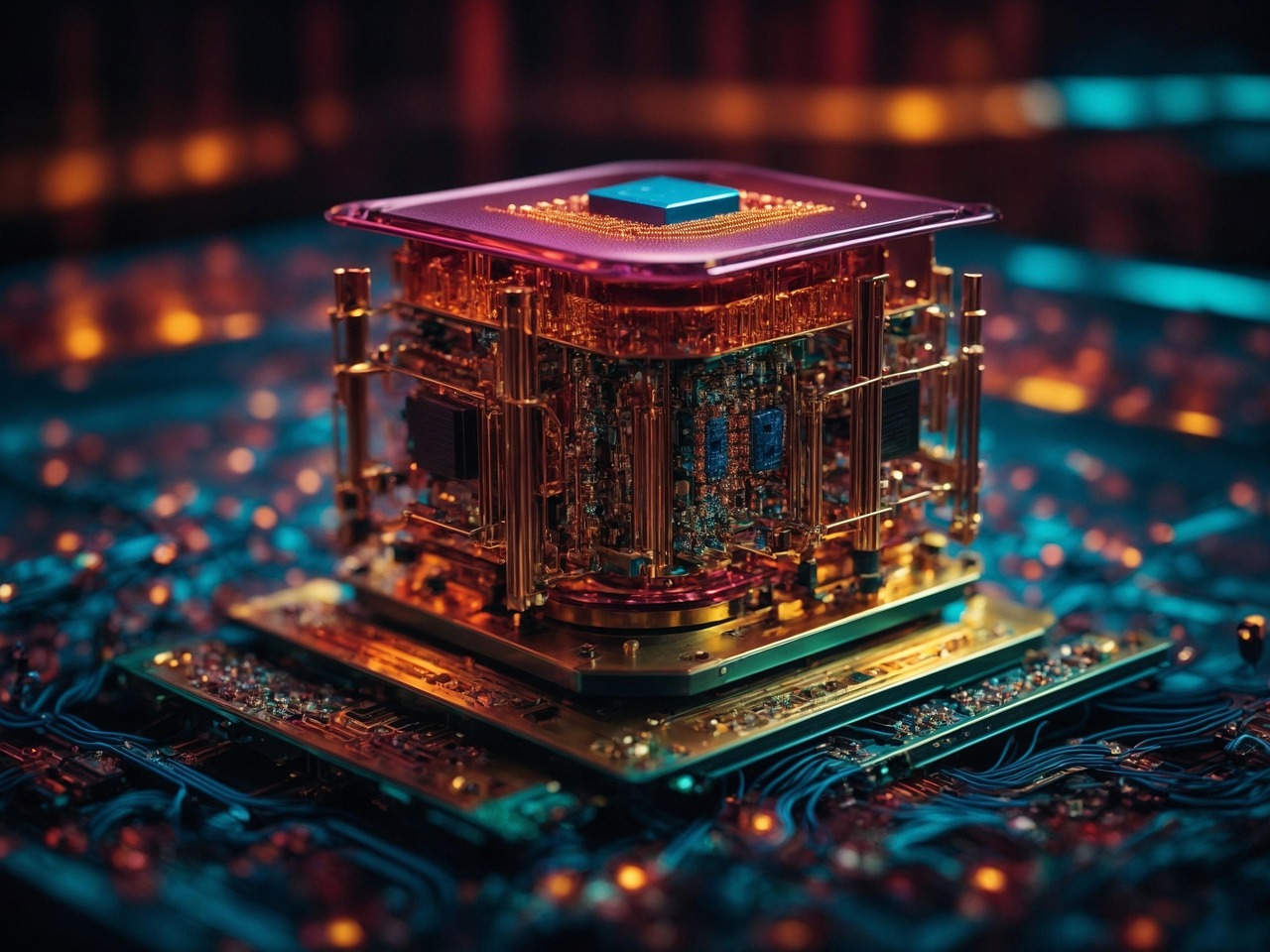
Introduction: The AI Race Has Entered a New Phase
The artificial intelligence race in 2026 looks very different from the AI competition of just a few years ago.
The industry is no longer focused exclusively on which company can create the most capable language model. The competition has expanded into almost every layer of computing.
Companies are competing to build better AI models, faster processors, more efficient inference systems, larger data centers, stronger cloud platforms and more capable AI agents.
At the center of this transformation is computing infrastructure.
NVIDIA remains one of the most important companies in the AI hardware ecosystem, but the competitive landscape is becoming broader. OpenAI is expanding its computing infrastructure while also moving toward a more complete technology stack. Cloud companies are developing custom accelerators. Semiconductor startups are targeting specialized AI workloads. Established technology companies are investing heavily in their own models and infrastructure.
The result is an AI race in which hardware, software, energy, capital and intelligence are increasingly connected.
In 2026, the most important question is no longer simply who has the best AI model.
It is who can build the most powerful and economically sustainable AI computing system.
What Is the AI Race in 2026?
The AI race refers to the competition among technology companies, semiconductor manufacturers, cloud providers, research organizations and startups to develop increasingly capable artificial intelligence systems.
In earlier stages, the competition centered heavily on model performance.
Today, the competition includes several interconnected layers.
These include AI accelerators, high-bandwidth memory, networking, data centers, electricity, cloud computing, model training, inference, AI agents, enterprise deployment and software ecosystems.
This broader competition is important because advanced AI requires enormous amounts of computing infrastructure.
A company can develop an excellent model, but without sufficient computing capacity it may struggle to train, deploy and serve that model at global scale.
Why NVIDIA Remains Central to the AI Computing Race
NVIDIA has become one of the most important companies in modern AI computing because its GPUs and software ecosystem are widely used for training and inference.
The company's influence extends beyond individual graphics processors.
NVIDIA increasingly provides complete AI computing platforms that combine accelerators, CPUs, networking, software and rack-scale infrastructure.
This approach allows customers to purchase integrated systems designed specifically for large-scale AI workloads.
As AI infrastructure becomes more complex, integrated systems can become increasingly valuable because customers need to optimize the entire computing stack rather than a single component.
NVIDIA Is Moving From Chips Toward AI Factories
One of the most important changes in NVIDIA's strategy is the move from selling individual chips toward participating in the construction of complete AI infrastructure.
NVIDIA has described modern AI data centers as AI factories that transform electricity and data into intelligence.
The company has also announced partnerships with major financial institutions designed to mobilize more than $500 billion of third-party capital for AI infrastructure over time.
This represents a major change in the economics of computing.
Instead of treating GPUs as isolated pieces of equipment, the industry is increasingly treating large AI computing facilities as productive infrastructure.
Why AI Factories Matter
An AI factory is essentially a large-scale computing facility optimized for continuously producing AI computation.
Traditional data centers process many types of workloads.
AI factories are increasingly designed around massive accelerator clusters, high-speed networking, advanced memory and sophisticated cooling systems.
Their objective is to maximize useful AI computation.
As AI moves from experimentation into production, companies need infrastructure that can operate continuously and efficiently.
This is particularly important for AI inference.
Every chatbot response, AI-generated document, coding task or autonomous agent action consumes computing resources.
OpenAI Is Becoming an Infrastructure Company Too
OpenAI is best known for developing AI models and products, but its long-term strategy increasingly depends on computing infrastructure.
The company has described its Stargate initiative as a long-term effort to build the compute foundation required for the Intelligence Age.
OpenAI has stated that growing demand from consumers, businesses, developers and governments requires substantial expansion of its computing footprint.
This means OpenAI is not simply competing in the model layer.
It is also competing in the infrastructure race.
Why OpenAI Needs Massive Computing Capacity
Frontier AI models require enormous computing resources during training.
But training is only part of the problem.
Once a model becomes popular, inference can generate continuous demand.
Millions of users can interact with AI systems throughout the day.
Businesses can integrate AI into software applications.
Developers can build autonomous agents that operate continuously.
All of these activities require computing.
As AI becomes embedded into more products, inference could eventually represent an even larger portion of total AI computing demand than model training.
NVIDIA and OpenAI Have Become Deeply Connected
NVIDIA and OpenAI are competitors in some strategic areas but remain closely connected through infrastructure.
The companies previously announced a strategic partnership targeting at least 10 gigawatts of NVIDIA systems for OpenAI's next-generation infrastructure.
The first gigawatt was planned for deployment during the second half of 2026 on NVIDIA's Vera Rubin platform.
This relationship demonstrates a defining feature of the modern AI industry.
Companies can simultaneously be customers, suppliers, partners and potential competitors.
The boundaries between AI model developers and hardware companies are becoming less clear.
OpenAI Is Also Moving Into Custom AI Hardware
Another major development is OpenAI's expansion toward specialized AI silicon.
In 2026, OpenAI and Broadcom announced an inference chip designed specifically around large language model workloads.
OpenAI said the accelerator was designed to deliver improved performance per watt and was developed as part of a broader multi-generation platform.
This is strategically significant.
It suggests that leading AI model companies increasingly want greater control over the hardware used to run their systems.
Custom silicon can potentially improve efficiency, reduce infrastructure costs and allow hardware to be optimized around specific workloads.
Why Custom AI Chips Could Change the Industry
General-purpose AI accelerators are extremely powerful, but they must support a wide range of workloads.
Custom chips can be designed around particular applications.
If a company operates enormous AI workloads with predictable characteristics, specialized hardware may offer better economics.
This creates an incentive for large AI companies and cloud providers to develop their own processors.
The result could be a more fragmented AI hardware market.
NVIDIA may remain the dominant general-purpose platform while specialized accelerators capture specific workloads.
The Rise of AI Inference as a New Battlefield
AI inference is becoming one of the most important areas of competition.
Training involves building a model.
Inference involves using that model to produce results.
As AI adoption grows, inference workloads can become continuous.
Businesses may run AI agents around the clock.
Search engines may use AI for billions of queries.
Software companies may embed AI into every application.
This makes inference efficiency economically critical.
Why Specialized AI Startups Are Attracting Billions
The expanding AI infrastructure market is creating opportunities for specialized startups.
One example is Etched, an AI chip startup focused on inference computing.
In August 2026, Reuters reported that Etched reached a $21 billion valuation following a $700 million funding round and had secured more than $1 billion in customer contracts.
The company is targeting inference workloads where speed and cost efficiency can become major competitive advantages.
The rise of companies like Etched demonstrates that investors increasingly believe the AI hardware market could support major challengers beyond established semiconductor companies.
AI Startups Are Challenging the Old Technology Hierarchy
The AI industry is unusual because new companies can sometimes compete with established technology giants by focusing on a narrow technical problem.
A startup does not necessarily need to build a complete computing ecosystem.
It can specialize in inference, networking, model optimization, memory architecture, data-center software or autonomous agents.
If the specialization produces a significant improvement in cost or performance, large customers may adopt the technology.
This creates opportunities for new companies to become important parts of the AI infrastructure stack.
The AI Chip Race Is Becoming a Multi-Company Competition
NVIDIA is not alone in the accelerator market.
AMD continues developing AI accelerators, while major cloud companies are building their own silicon.
Google has its TPU ecosystem.
Amazon has developed custom AI processors.
Microsoft is also investing in proprietary AI silicon.
Meanwhile, startups are targeting specialized inference and training applications.
The result is a much more competitive semiconductor landscape.
Why AI Hardware Competition Is Different From the PC Era
The personal-computer industry largely revolved around standardized processors and operating systems.
AI computing is more heterogeneous.
Different workloads may benefit from different architectures.
Training, inference, recommendation systems, robotics, autonomous vehicles and scientific computing can have different hardware requirements.
This creates opportunities for specialized architectures.
The future may therefore contain many AI processor categories rather than a single dominant architecture.
AI Agents Could Dramatically Increase Computing Demand
AI agents represent another major driver of the computing race.
A conventional chatbot generally responds to a prompt.
An AI agent can perform multiple actions.
It can search for information, analyze files, write software, call APIs, use external tools and evaluate its own results.
Each additional action can require additional inference.
If organizations deploy millions of AI agents, total computing demand could rise substantially.
This is one reason infrastructure companies expect the AI computing market to expand beyond traditional chatbot usage.
From Chatbots to Digital Workers
The industry is gradually moving toward AI systems that perform tasks rather than simply generate answers.
These systems may act as software developers, research assistants, customer-service agents, analysts or operational tools.
Such systems can generate much higher computing demand because they may operate for extended periods.
The economic value of AI could therefore increasingly depend on the number of productive tasks machines can complete rather than simply the number of conversations they can conduct.
Why AI Infrastructure Needs Enormous Amounts of Energy
AI computing requires electricity.
Large accelerator clusters can consume enormous amounts of power.
Data centers also require cooling systems and supporting electrical infrastructure.
As AI facilities grow, access to reliable electricity can become as important as access to chips.
This is why companies are increasingly securing land, power and data-center construction capacity years ahead of deployment.
Power Is Becoming a Strategic AI Resource
The AI race is therefore also becoming an energy race.
Countries with abundant reliable electricity can have an infrastructure advantage.
Technology companies must consider electricity generation, grid connections, transmission capacity and cooling when planning large AI campuses.
This means AI development increasingly intersects with the energy industry.
The New Bottleneck: Land, Power and Data Centers
For years, the biggest concern in AI was access to GPUs.
In 2026, the bottleneck is becoming broader.
Companies may have access to processors but still face difficulties securing electricity, construction capacity, networking equipment and suitable locations.
NVIDIA has described land, power and shell capacity as critical resources for building AI factories.
This changes the competitive landscape.
The companies capable of securing physical infrastructure early can potentially deploy computing capacity faster than competitors.
AI Computing Is Becoming an Investment Asset
Another major development in 2026 is the increasing involvement of institutional capital.
NVIDIA has announced partnerships with major investment firms including Apollo, BlackRock, Blackstone, Brookfield, Goldman Sachs and KKR to establish financing platforms for AI infrastructure.
The objective is to mobilize more than $500 billion of third-party capital over time.
This indicates that AI infrastructure is increasingly being viewed as a long-duration productive asset.
Why Wall Street Is Interested in AI Infrastructure
AI data centers can potentially generate revenue over many years through cloud computing, inference and AI services.
This makes them attractive to infrastructure investors.
Instead of technology companies financing every facility entirely from their own balance sheets, institutional investors can potentially provide capital for large AI projects.
This could accelerate the expansion of computing infrastructure.
However, it also creates financial risks if AI demand fails to justify the massive investments being made.
The AI Race Is Becoming a Capital Race
AI leadership requires more than talented researchers.
Companies need access to enormous amounts of capital.
Capital is required to purchase chips, build data centers, secure electricity, hire engineers and operate models.
This creates a competitive advantage for companies with strong financing relationships.
It also explains why AI companies are forming partnerships with semiconductor companies, cloud providers and financial institutions.
Why Smaller AI Companies Could Still Win
Despite the enormous capital requirements, smaller AI companies can still become major competitors.
They do not necessarily need to build massive frontier models.
A startup can target a specialized problem where efficiency matters more than scale.
For example, an inference company may optimize a specific workload dramatically better than general-purpose hardware.
A model startup may develop a highly efficient model that produces similar results with a fraction of the computing requirements.
Specialization can therefore offset some of the advantages of scale.
The Battle Between Closed and Open AI Models
Another major competition concerns how AI models are distributed.
Closed models allow companies to control access, pricing and intellectual property.
Open-weight models can give developers greater flexibility and can potentially reduce dependence on individual providers.
In 2026, major technology companies are increasingly debating the economic and strategic consequences of these approaches.
Open models can encourage adoption and ecosystem growth.
Closed systems can provide stronger control over monetization and safety.
The balance between openness and control could influence the future structure of the AI industry.
Why AI Model Efficiency Is Becoming More Important
AI progress is no longer measured only by model size.
Efficiency is becoming increasingly important.
A model that can produce high-quality results using fewer computing resources may be more commercially attractive than a larger model with significantly higher operating costs.
This is particularly important for businesses deploying AI at scale.
When millions of requests are processed every day, even a small reduction in cost per request can produce enormous savings.
The Future of Computing May Be About Cost per Intelligence
A useful way to think about the next phase of AI is cost per useful intelligence.
Companies will increasingly ask how much useful work an AI system can perform for every dollar of computing infrastructure.
This includes hardware costs, electricity, networking, cooling and software.
The most successful AI platforms may therefore not be the ones with the largest models.
They may be the platforms that provide the best combination of intelligence, speed, reliability and cost.
Why Inference Economics Could Determine the Winners
Training creates the model, but inference creates ongoing operating costs.
If an AI application becomes extremely popular, inference expenses can become one of its largest costs.
This creates enormous opportunities for companies that can reduce the cost of inference.
It also explains the interest in specialized inference chips.
The future of AI hardware could increasingly be determined by how efficiently processors convert electricity into useful AI outputs.
NVIDIA's Advantage: The Full AI Stack
NVIDIA's major advantage is that it does not compete only at the chip level.
The company has developed a broad ecosystem covering accelerators, CPUs, networking, software libraries, developer tools and complete computing platforms.
This creates significant ecosystem value.
Customers can deploy NVIDIA systems without assembling every component independently.
Developers also benefit from a mature software ecosystem.
This combination can make it difficult for competitors to displace NVIDIA even when alternative hardware offers strong performance.
OpenAI's Advantage: Control Over AI Workloads
OpenAI has a different strategic advantage.
It develops models and applications that generate large amounts of real-world AI workload.
This gives the company insight into how AI systems behave in production.
That knowledge can influence hardware design, inference optimization and infrastructure planning.
Its move toward custom inference hardware demonstrates how model developers can increasingly use workload knowledge to optimize computing systems.
The New AI Companies Are Attacking the Gaps
New AI companies are targeting the spaces where established systems may be inefficient.
Some focus on inference chips.
Others build specialized models, AI agents, robotics systems, networking technology or data-center software.
The AI ecosystem is therefore becoming more modular.
A startup does not need to defeat NVIDIA or OpenAI across the entire market.
It may only need to become dramatically better at one critical component.
AI Competition Is Also Becoming Global
The AI race is not restricted to Silicon Valley.
Companies in the United States, China, Europe, the Middle East and other regions are investing in models, processors and computing infrastructure.
Governments increasingly view AI capability as strategically important for economic competitiveness and national security.
This means AI investment is increasingly influenced by government policy as well as private capital.
Why Semiconductor Supply Chains Matter
Advanced AI chips depend on complex global semiconductor supply chains.
Chip design, advanced manufacturing, packaging, memory, networking and equipment are distributed across multiple companies and regions.
A disruption in one part of the supply chain can affect the entire AI infrastructure industry.
This makes supply-chain resilience an important component of AI strategy.
Could AI Infrastructure Become the Next Industrial Revolution?
The scale of AI infrastructure investment suggests that the industry may be entering a broader industrial transformation.
Data centers require buildings, electricity, cooling, networking and specialized equipment.
Semiconductor factories require enormous capital investment.
Energy infrastructure must expand alongside computing demand.
This means AI is increasingly creating physical economic activity in addition to software innovation.
What the AI Race Means for Businesses
Businesses should not assume that the AI race only concerns technology companies.
AI infrastructure decisions will increasingly affect software pricing, productivity, cybersecurity, customer service, financial analysis, manufacturing and logistics.
Companies that adopt AI efficiently could gain significant productivity advantages.
However, organizations also need to understand the underlying computing economics.
Using the most expensive model for every task may not be economically rational.
Why Enterprises Will Use Multiple AI Models
The future enterprise AI environment is likely to be multi-model.
Companies may use powerful frontier models for complex reasoning while deploying smaller models for routine tasks.
Specialized models may handle coding, document analysis, customer service or classification.
This approach can reduce costs while maintaining performance.
It also reduces dependence on a single AI provider.
The Future AI Stack Will Be More Diverse
The AI stack of the future may contain several layers.
At the hardware layer will be GPUs, custom accelerators, inference chips, CPUs and specialized processors.
The infrastructure layer will include data centers, networking, storage, power and cooling.
The model layer will contain frontier models, open-weight models and specialized systems.
The application layer will include AI agents, enterprise software, robotics and consumer products.
Competition will occur at every level.
What Could Stop the AI Race?
The AI expansion faces several constraints.
Energy availability is one.
Capital requirements are another.
Semiconductor supply chains can also become bottlenecks.
Regulation, safety and cybersecurity could influence how quickly increasingly autonomous systems are deployed.
Finally, companies must demonstrate that AI creates enough economic value to justify the enormous infrastructure investments involved.
The Risk of an AI Infrastructure Bubble
Rapid investment always creates the possibility of overbuilding.
If companies construct too much AI capacity relative to actual demand, utilization rates could decline.
Cloud providers could reduce prices.
AI startups could struggle to generate sustainable margins.
Investors could become more selective.
However, the opposite scenario is also possible.
If AI adoption grows faster than infrastructure supply, computing capacity could remain scarce for years.
The balance between these scenarios will determine the financial sustainability of the AI infrastructure boom.
What Could Happen Next?
The next phase of the AI race is likely to focus increasingly on inference, AI agents and efficiency.
Companies will attempt to reduce the cost of producing useful AI output.
Hardware manufacturers will compete on performance per watt.
AI companies will develop custom processors.
Cloud providers will expand their proprietary silicon programs.
Investors will continue financing large-scale computing infrastructure.
And governments will increasingly treat AI capability as a strategic national resource.
Conclusion: The Future of Computing Is Being Rebuilt Around AI
The AI race in 2026 is much larger than a competition between a handful of model companies.
NVIDIA is expanding its role from accelerator supplier toward full AI infrastructure and financing.
OpenAI is expanding its compute footprint and moving closer to controlling more of the stack required to operate advanced AI.
Cloud companies are developing custom processors.
New startups are targeting inference, specialized hardware and efficient AI systems.
The common denominator is computing.
AI requires enormous quantities of computation, and the companies capable of securing that computation efficiently will have a major strategic advantage.
The next generation of technology competition may therefore be determined by a combination of model intelligence, chip performance, energy efficiency, infrastructure scale and capital.
The most important AI company of the future may not necessarily be the company with the single smartest model.
It may be the company that can turn computing resources into useful intelligence more efficiently than everyone else.
That is why the AI race in 2026 is ultimately a race to redefine computing itself.