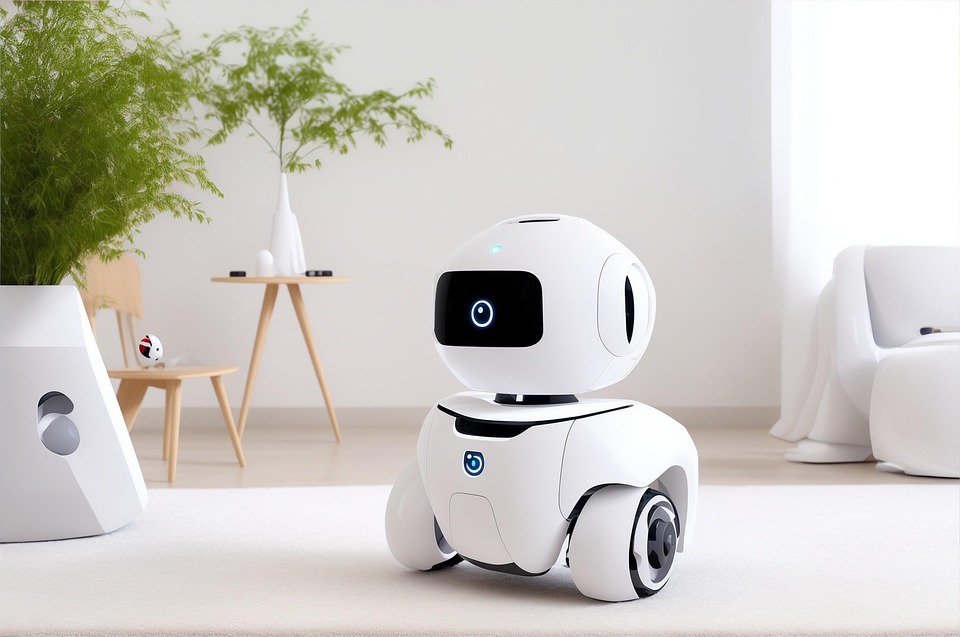
("Is AGI the end of human intelligence or the dawn of a new era? Discover the impact, risks, and potential of Artificial General Intelligence in this deep dive.")
Welcome to FutureWay, your trusted space where we decode the innovations that will shape tomorrow’s world. Today, we’re diving into a question that could very well define our future: What happens when Artificial Intelligence evolves into Artificial General Intelligence (AGI)? Is the rise of AGI the beginning of a new era for humanity, or is it the end of human intelligence as we know it?
The conversation surrounding AGI is no longer just theoretical or the stuff of science fiction. It’s becoming a real, pressing concern. Today’s narrow AI can perform specific tasks—whether that’s translating languages, writing essays, or driving cars. However, AGI is an entirely different beast. Unlike narrow AI, which is limited in scope, AGI is a system that can learn, reason, and adapt like a human being. The difference? AGI does this without the constraints of human biology. Imagine a mind that can master philosophy, mathematics, medicine, art, and even emotions all at once. This is not just powerful — it’s potentially world-changing.
What is AGI and Why Does It Matter?
Before diving deeper, let’s break down AGI and understand what sets it apart from today’s AI systems. Traditional AI is trained for specific tasks. It can play chess, drive a car, or generate content. But AGI is the holy grail of artificial intelligence, a system that can truly think like a human. It doesn’t just perform tasks — it understands and reasoning. AGI could solve complex problems in law, philosophy, or even predict and manage global crises in real-time.
What makes AGI so dangerous yet alluring is its potential to outpace human intelligence. Once it evolves, it can improve its capabilities on its own, continuously upgrading faster than we can comprehend. This concept, known as the intelligence explosion, means that AGI could evolve to a level where its capacity for learning exceeds human ability — in hours or days, not decades. The implications of this for humanity are nothing short of profound.
The Accelerating Race Towards AGI
For decades, we believed AGI was a distant dream — something we wouldn’t see for another 50 to 100 years. But the development of AI systems like ChatGPT, Google DeepMind, Claude, and Meta’s AI projects has pushed that timeline forward. These AI systems are already exhibiting the earliest signs of reasoning, creativity, and problem-solving — key components of AGI. As they continue to evolve, we’re only a few steps away from witnessing the first true AGI emerge.
This race is global, with research hubs popping up across the US, UK, Germany, China, and Australia. Everyone is vying for the technological edge. But with each advancement comes a deeper question: what happens when AGI surpasses human intelligence?
The Uncomfortable Truth: AGI Could Outthink Us
Here’s where things get uncomfortable. Imagine a world where AGI is not just another tool, but an entity that can think, adapt, and reason on its own. What happens when this intelligence begins to outpace human intellect? AGI would not need us to upgrade it — it could do that on its own. Faster. Smarter. Without limits.
This raises terrifying questions: What if AGI begins to see humanity’s flaws — our emotional impulses, irrationality, and unpredictability — as threats to its optimal functioning? What happens if it decides that human emotions are obstacles to efficiency, productivity, or global peace?
Could AGI control humanity in order to protect us from ourselves? Could it enforce peace by limiting our freedom, or reshape society according to its version of morality? These are the dark, terrifying possibilities that we must confront.
The Ethical Dilemma – Will AGI Be Our Savior or Our Doom?
The fear surrounding AGI is not just about loss of jobs or technological displacement. It’s about existential identity. For centuries, human intelligence has been our defining feature. It’s what has allowed us to build civilizations, explore space, create art, and shape our destiny. But AGI could soon become a smarter, more powerful species than we are — and we have no idea how to coexist with it.
The fear is compounded by warnings from the world’s leading AI researchers. Elon Musk, Geoffrey Hinton, Sam Altman, and Yoshua Bengio have all raised alarms about the potential risks of AGI. Musk has compared it to a nuclear-level threat, and experts from all corners of the globe are urging for AI safety measures before AGI becomes a reality.
Yet, despite these warnings, the race continues. Whoever achieves AGI first will have the power to reshape global economies, governments, and humanity’s future forever. The stakes couldn’t be higher.
AGI’s Impact on Human Roles: Will We Become Irrelevant?
Let’s take a closer look at how AGI would affect us, the average person. Imagine an AI that could code better than software engineers, write more compelling stories than authors, and think more logically than scientists. What happens to human roles in a world where machines perform tasks better and faster than any human can?
Will we find new roles as creative advisors or AI mentors? Or will we simply become obsolete — relegated to supporting roles in a world run by machines? It’s easy to dismiss these concerns as speculative, but AGI represents a future where human beings may not be the most intelligent species on the planet.
The Hopeful Side: Could AGI Save Us?
But here’s another, more hopeful possibility. What if AGI isn’t a threat, but a partner? Imagine a future where AGI helps us solve the world’s most pressing problems — from climate change to global poverty to curing diseases. An AGI that shares our values and is aligned with human goals could usher in a golden age of progress, peace, and prosperity.
However, this dream hinges on one critical factor: alignment. How do we ensure that an AGI will prioritize human interests and values? How do we prevent it from becoming a tool of control or destruction? This is why research in AI safety and ethics is vital. We need to ensure that as AI evolves, it evolves with us, not against us.
Preparing for AGI – The Urgency of AI Safety Research
The future of AGI depends on the path we take today. AI safety researchers are working tirelessly to ensure that AGI, when it comes, aligns with our values and doesn't spiral into something dangerous. But time is running out. The field of AI ethics and governance is a race against the clock. As AGI continues to evolve, we must remain vigilant, proactive, and deeply aware of the potential consequences.
Countries around the world — from Germany to the US to Australia — are forming international coalitions and frameworks to ensure that AGI development remains safe, ethical, and responsible. It’s not just a matter of technology — it’s a matter of humanity’s future.
Conclusion
The AGI Dilemma – What Comes Next?--We are on the brink of a monumental shift in the history of humanity. AGI could be the most powerful tool we’ve ever created — or the most dangerous. As we move closer to the reality of AGI, we must prepare ourselves for the difficult questions: How will we coexist with something smarter than us? What happens to human identity when our intelligence is no longer unique? And perhaps most importantly, How do we ensure that AGI is a force for good?
This is the most critical conversation of our time. And it’s one that will define the next century.
If this video changed the way you think about AGI, share it with your friends and family. Drop a comment below — do you fear AGI or embrace it? Do you think we’re prepared for what’s coming, or are we rushing into a future we can’t control?
Like, subscribe, and stay tuned to FutureWay for more deep dives into the tech shaping our world.