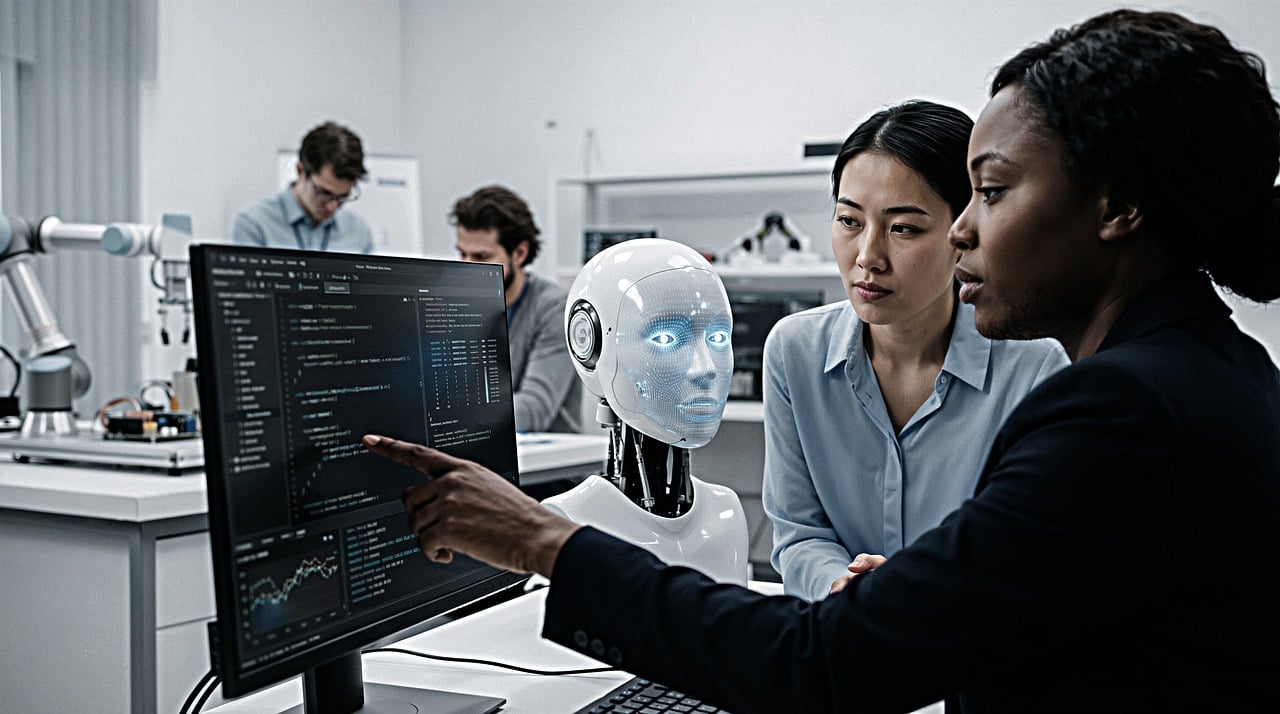
The Day Video Stopped Being Proof
For much of the modern internet era, video has carried an unusual psychological advantage. People may distrust a written claim, question a photograph or demand a source for a statement, but moving images often feel like direct evidence.
That assumption is becoming harder to maintain.
Generative artificial intelligence can now create highly realistic video containing people, voices, environments and events that never existed. At the same time, AI can modify genuine footage by changing faces, expressions, voices, backgrounds and other elements.
The result is a new problem that goes beyond traditional misinformation.
When fake video becomes convincing enough, the damage is not limited to the people who believe a particular fake. The existence of convincing fakes can also make people question genuine footage.
That distinction is crucial.
A false video can mislead someone.
A world filled with convincing synthetic videos can make people uncertain about almost every video.
Recent 2026 research from MIT found that participants exposed to realistic AI-generated videos later reported greater doubt about the authenticity of subsequent human-generated videos, along with lower confidence in their own judgments. The study suggests that synthetic media can influence perception even when people are explicitly told that the material is AI-generated. :contentReference[oaicite:1]{index=1}
What Exactly Is a Deepfake?
The term deepfake generally refers to AI-generated or AI-manipulated audiovisual material designed to create a misleading representation of a person or event.
Earlier generations of manipulated video often left obvious visual clues. Faces could appear distorted, lighting could look unnatural and lip movements might not match speech.
Modern generative systems are changing that equation.
Deepfake technology can involve face replacement, facial reenactment, synthetic voices, lip synchronization, full-body generation and increasingly sophisticated video synthesis.
The technology is not limited to replacing a face in an existing recording.
Generative models can increasingly produce entire scenes from text or images.
This means that the question is no longer only whether a real video has been edited.
Sometimes the entire video can be synthetic.
Why Modern Deepfakes Are Different
The biggest technological change is the improvement of generative video models.
Earlier synthetic videos were often short and visually unstable. Hands, facial expressions, object interactions and backgrounds could change unpredictably between frames.
Newer systems are substantially better at maintaining visual coherence.
They can generate realistic movement, camera perspectives, lighting and physical interactions.
That improvement creates a problem for traditional detection strategies.
If a detector depends on a specific generation artifact, a newer model may simply stop producing that artifact.
This creates a technological arms race between generation and detection.
The New Problem Is Not Just Fake Videos
Imagine that a fake video of a public figure becomes viral.
People eventually discover that the video was generated.
The immediate problem is misinformation.
But there can be a second effect.
Later, a genuine video of the same person appears.
Viewers remember that realistic fake footage was possible.
Some may therefore respond by asking whether the genuine video is also artificial.
This is sometimes described as a broader authenticity problem.
The issue is no longer simply distinguishing one fake from one real recording.
It is maintaining confidence in the authenticity of digital evidence as a whole.
Can People Still Tell Real From AI?
Human perception is not a perfect deepfake detector.
As video quality improves, obvious visual errors become less common.
Research and industry experiments in 2026 demonstrate how difficult highly realistic synthetic video can be for ordinary viewers.
Runway's 2026 Turing Reel experiment, for example, reported that more than 90% of participants could not reliably distinguish its generated five-second videos from real videos in the tested setup. Overall accuracy was 57.1%, only modestly above chance. This was an industry study and its methodology should be considered when interpreting the result, but it illustrates how quickly synthetic video quality is approaching the perceptual threshold at which casual inspection becomes unreliable. :contentReference[oaicite:2]{index=2}
The UK's Department for Science, Innovation and Technology similarly described deepfake detection as an emerging field that remains at an early stage, despite significant research and development activity. :contentReference[oaicite:3]{index=3}
Why Real Videos Can Start Looking Suspicious
This is perhaps the most important psychological consequence of synthetic media.
Suppose people know that AI can create almost perfect fake footage.
They may begin applying a higher level of skepticism to everything they see.
That skepticism can be useful when it encourages verification.
But it can also become counterproductive.
If people begin believing that any inconvenient or surprising video might be fake, authentic evidence can be dismissed without investigation.
This creates an unusual situation in which technology can weaken the evidentiary value of both fake and real media.
The Replicant Effect of Synthetic Media
Researchers studying AI-mediated communication have observed that exposure to AI-altered content can change how people evaluate subsequent media.
The 2026 MIT research provides evidence for this effect in realistic video. Participants exposed to synthetic videos became more doubtful and less confident when evaluating later authentic footage. :contentReference[oaicite:4]{index=4}
This matters because social media users rarely consume one isolated video.
A feed may contain genuine footage, edited footage, AI-generated advertisements, synthetic influencers and deepfakes within the same few minutes.
The human brain must constantly switch between different assumptions about authenticity.
That mixed environment may make confidence itself harder to maintain.
Why Disclosure Does Not Completely Solve the Problem
One might assume that a simple AI-generated label solves the problem.
If platforms clearly identify synthetic videos, viewers should know which content is artificial.
But recent research suggests that transparency labels are not necessarily enough to prevent downstream effects on belief.
A 2026 study published in Communications Psychology examined the continued influence of AI-generated deepfake videos even when transparency warnings were provided. The research highlights that warnings may not completely eliminate the influence of synthetic content. :contentReference[oaicite:5]{index=5}
This creates an important distinction between disclosure and verification.
A label tells the viewer that a platform believes content was generated or altered.
Provenance can provide evidence about how the content was created and modified.
Those are related but different functions.
Why Deepfake Detection Is an AI Arms Race
Deepfake detection attempts to identify characteristics associated with synthetic media.
These characteristics can exist at several levels.
A detector might examine facial movement, temporal consistency, audio patterns, image compression, frequency-domain information or other statistical features.
But every detection method has an underlying assumption.
If generators change, that assumption can become weaker.
A detector trained mostly on one family of synthetic videos may perform poorly on another.
Researchers therefore face a generalization problem.
The detector must recognize manipulation methods it has not necessarily seen before.
The Problem With AI Detectors
AI detectors can be useful, but their output should not automatically be interpreted as proof.
A detector may produce a probability that a video is synthetic.
That probability depends on the model, training data, threshold and type of media being analyzed.
A false positive can incorrectly label genuine footage as artificial.
A false negative can allow synthetic footage to pass as genuine.
Both errors have consequences.
This is particularly important in journalism, legal evidence, financial fraud investigations and other high-stakes environments.
Why Detection Does Not Prove Authenticity
There is a fundamental logical difference between failing to detect a deepfake and proving that a video is genuine.
Suppose a detector examines a video and finds no known signs of manipulation.
That does not establish who recorded it, where it was recorded or whether the file has been altered in a way the detector cannot recognize.
Authenticity requires more than the absence of detected anomalies.
This is why provenance systems are becoming increasingly important.
Digital Provenance Could Change the Game
Digital provenance approaches the problem from another direction.
Instead of asking only, “Does this video look fake?” the system asks, “Where did this video come from, and what happened to it after it was created?”
That can include information about the originating device, creator, editing software, transformations and publishing history.
If that information can be cryptographically protected and preserved across platforms, it can provide a stronger basis for authenticity decisions.
It does not make the content automatically true.
A genuine camera can record a false event.
But provenance can help establish the history of the file itself.
What Are Content Credentials?
Content Credentials are designed to provide information about the origin and history of digital content.
They are associated with the Coalition for Content Provenance and Authenticity, commonly known as C2PA.
The basic idea is to attach verifiable provenance information to digital media.
For example, a piece of content could carry information indicating that it was captured by a particular device and subsequently edited using particular software.
When AI is involved, provenance can also record that synthetic generation or AI-assisted editing occurred.
The approach shifts part of the authenticity problem from visual detection to verifiable history.
Why C2PA Matters
C2PA is important because digital content frequently moves between different systems.
A photograph may be captured on a phone, edited in an application, uploaded to a website, downloaded by another person and reposted on a social network.
Each transformation can remove or alter contextual information.
A standardized provenance mechanism can potentially preserve important information through that chain.
However, provenance is not a magic solution.
Adoption, interoperability, implementation quality and preservation of credentials all matter.
A platform that strips provenance information can reduce the usefulness of the system.
Can Watermarks Stop Deepfakes?
Watermarking is another approach.
An AI model can embed a signal into generated content that identifies it as synthetic.
Ideally, the signal remains detectable after ordinary transformations such as compression or resizing.
Watermarks can help platforms and verification systems identify AI-generated content.
But watermarking has limitations.
Content can potentially be transformed, cropped, re-recorded or otherwise processed in ways that make detection harder.
Watermarking is therefore better understood as one layer in a larger authenticity system rather than a universal solution.
Deepfakes and Social Media
Social media creates an ideal distribution environment for synthetic media.
Short videos can be created cheaply and distributed globally within minutes.
Algorithms may recommend content based on engagement rather than authenticity.
A convincing deepfake can therefore reach large audiences before fact-checkers or platform investigators have time to evaluate it.
The problem becomes even more complicated when genuine and synthetic media appear side by side.
Users are not necessarily making a conscious authenticity decision for every video.
They are scrolling rapidly.
That makes subtle detection clues less useful.
The Rise of AI-Generated News Footage
News organizations face a particularly difficult problem.
Breaking news often depends on eyewitness video uploaded from phones.
Historically, such footage could provide important evidence before professional journalists reached a location.
Generative video creates an opportunity to fabricate exactly this kind of material.
A fake emergency scene can be presented as eyewitness footage.
A synthetic interview can be presented as a genuine statement.
A generated crowd or disaster can be inserted into a misleading narrative.
Journalists therefore increasingly need verification procedures that go beyond watching the footage.
Deepfakes and Online Scams
Deepfakes are also becoming relevant to fraud.
Voice cloning can make a phone call sound like a family member, executive or colleague.
Video synthesis can make a person appear to participate in a video call.
Combined with social engineering, synthetic media can increase the credibility of fraudulent requests.
This creates a security problem based on trust rather than simply malware.
The attacker does not necessarily need to compromise a computer.
They may instead manipulate the victim's confidence in the identity of the person communicating with them.
Deepfakes and Identity Fraud
Identity verification systems traditionally rely on visual or audio characteristics.
Deepfake technology challenges that assumption.
If an attacker can reproduce a person's face and voice, organizations may need additional authentication factors.
This is particularly important for financial services, customer support, remote onboarding and high-value transactions.
A video call should not automatically be treated as proof of identity.
Independent authentication remains important when the requested action has significant consequences.
Why Video Calls Are Also Changing
Synthetic media is not limited to prerecorded clips.
AI-mediated communication can modify a person's appearance, background or avatar during a live interaction.
Research presented at the 2026 CHI Conference examined AI-mediated video communication involving retouching, background replacement and avatars. Across two preregistered experiments with 2,000 participants, the researchers found that AI mediation could reduce trust and confidence in judgments, although it did not change actual lie-detection accuracy in their experiments. :contentReference[oaicite:6]{index=6}
This is an important distinction.
People may become less confident without becoming more accurate.
That suggests the problem is partly about how people experience credibility and uncertainty, not simply whether they can technically identify deception.
The Cybersecurity Problem Behind Synthetic Video
Deepfakes introduce several cybersecurity risks.
They can be used for social engineering, impersonation, fraud, account recovery attacks and manipulation of employees.
Organizations therefore need to think about identity verification differently.
A security process that assumes a video call is inherently trustworthy may become increasingly fragile.
High-risk requests should be independently confirmed through a separate channel.
For example, an employee receiving a video request to transfer money could verify the instruction using an established internal process rather than relying on the video itself.
Could AI-Generated Evidence Become a Forensic Problem?
Law enforcement and courts face a particularly difficult version of the authenticity challenge.
Digital evidence must be evaluated carefully because manipulated media can potentially affect investigations and legal proceedings.
Forensic researchers are therefore exploring methods that analyze the underlying structure of multimedia files rather than relying solely on visual AI detectors.
A 2026 research paper proposed an MP4 structural analysis approach that examines container-level characteristics for signs of manipulation and emphasizes explainable forensic evidence. :contentReference[oaicite:7]{index=7}
This represents an important direction: instead of simply asking an AI to say “fake” or “real,” investigators can examine technical evidence about the file itself.
Why Media Literacy Is Changing
Traditional media literacy often teaches people to examine the source, headline, image and supporting evidence.
That remains useful.
But synthetic media adds another question.
Can the claimed origin of the media be independently verified?
Viewers may need to become more comfortable with uncertainty.
Instead of asking whether a video looks real, they may need to ask who published it, where it first appeared, whether independent sources confirm the event and whether trustworthy provenance information is available.
What Happens When People Stop Believing Video?
If visual evidence becomes less trusted, society may need alternative mechanisms for establishing authenticity.
This does not mean that video will become useless.
Rather, its evidentiary value may depend increasingly on context.
A video accompanied by reliable provenance, a known source and independent confirmation is different from an anonymous clip reposted thousands of times without any information about its origin.
The future of digital evidence may therefore become more layered.
Authenticity could depend on multiple independent signals rather than one visual impression.
The Future May Be Provenance, Not Detection
Deepfake detection will remain important.
Forensic detectors can identify suspicious media and help investigators prioritize files for examination.
But detection alone faces a fundamental limitation: new generation systems can produce content that existing detectors were not designed to recognize.
Recent research into synthetic video detection continues to highlight generalization as a major challenge. The SAFE challenge, for example, focuses on developing more reliable detection methods for synthetic video and evaluating them against difficult conditions. :contentReference[oaicite:8]{index=8}
This is why a defense-in-depth approach is becoming increasingly relevant.
Detection can identify suspicious content.
Provenance can establish origin and history.
Watermarks can provide machine-readable signals.
Platform systems can preserve context.
Human investigators can verify important claims.
No single layer needs to solve the entire problem.
Why the Trust Problem May Be Bigger Than the Deepfake Problem
The most important consequence of synthetic media may ultimately be psychological.
People have historically relied on their senses to make quick judgments about digital information.
AI weakens that shortcut.
A video can look real without depicting a real event.
A voice can sound familiar without coming from the person it represents.
A photograph can show a scene that never existed.
At the same time, authentic media can be dismissed as AI-generated.
This creates what might be called a synthetic-reality dilemma.
The challenge is no longer simply preventing people from believing false media.
It is also preventing people from losing confidence in genuine evidence.
What Technology Companies Are Trying to Build
Technology companies, researchers and standards organizations are increasingly exploring systems designed to make media origin easier to verify.
The International Telecommunication Union highlighted in 2026 that AI can now create, alter, remix and distribute media at unprecedented scale, creating questions about authenticity, responsibility and how trust can travel across platforms. :contentReference[oaicite:9]{index=9}
This points toward a broader infrastructure problem.
Authenticity cannot be solved entirely inside a single AI detector.
It requires cooperation among device manufacturers, software developers, content platforms, journalists, researchers, regulators and users.
Could Every Camera Become an Authenticity Device?
One possible future is that cameras and recording devices automatically create signed provenance information when media is captured.
The signature could record when the media was created and which device captured it.
Editing applications could then append verifiable information whenever the file is changed.
Platforms could display this history to users.
Such a system would not prove that an event depicted in the video actually happened as claimed.
But it could make the chain of custody much clearer.
Why Provenance Needs to Survive the Internet
A provenance system is only useful if its information survives the way people actually share content.
Videos are downloaded, compressed, screen-recorded, cropped and reposted.
They move between platforms that may use different technical systems.
Maintaining provenance across this environment is difficult.
Standards therefore matter because they can provide a common language for different systems.
Could Synthetic Media Eventually Become Normal?
Yes, and that could change the nature of the problem.
AI-generated images and videos may eventually become ordinary creative tools.
People may use synthetic actors in advertisements, generated environments in entertainment and AI avatars in communication.
In that world, the existence of synthetic media itself is not necessarily suspicious.
The important question becomes whether viewers know what they are looking at and whether claims about the content can be independently verified.
Society may therefore move from a model of “real versus fake” toward a model of “what is this media, where did it come from and what claims does it actually support?”
The Technology Problem of Synthetic Reality
Synthetic reality does not necessarily mean that everything around us is fake.
It means that the technical ability to generate realistic representations of people and events is becoming widespread.
That changes the information environment.
When production becomes cheap, authenticity becomes harder to infer from appearance alone.
The same technology can be used for entertainment, education, accessibility and creative expression while also being used for fraud and misinformation.
The technology itself therefore cannot provide the complete solution.
Verification infrastructure must evolve alongside generation capability.
What Individuals Can Do
People do not need to become forensic video experts.
Instead, important claims can be treated with a verification mindset.
Check the original source.
Look for independent reporting.
Consider whether the account publishing the video has a credible history.
Look for provenance or content-credential information when available.
Be cautious when a video is designed to provoke an immediate emotional response or demand urgent action.
For high-stakes requests, verify the identity of the person through another communication channel.
Most importantly, avoid treating either “it looks real” or “it looks strange” as definitive proof.
What Organizations Can Do
Organizations need stronger procedures because deepfake attacks can target employees rather than technology infrastructure directly.
Financial transactions, password resets, sensitive information requests and executive instructions should have independent verification procedures.
Employees should be trained to recognize that familiar faces and voices are no longer sufficient authentication factors.
Security teams can also monitor for impersonation and synthetic-media threats.
Technical controls, human procedures and staff awareness should work together.
Why Governments and Standards Bodies Matter
Governments and standards organizations have an important role in establishing common approaches to media authenticity.
Standards can improve interoperability between cameras, editing software, AI providers and platforms.
Regulatory frameworks can establish responsibilities for certain high-risk uses.
However, rules alone cannot solve the technical problem.
Technology changes rapidly, so verification infrastructure must be adaptable.
Could AI Help Solve the Deepfake Problem It Created?
Ironically, AI may become both the source of the problem and part of the solution.
Machine-learning systems can analyze enormous amounts of video for subtle inconsistencies that humans may miss.
They can examine audio, facial motion, compression patterns and other signals.
AI can also help search for the earliest appearance of a video or compare versions across the internet.
But AI detection should remain one component of a broader verification system.
A detector's prediction is evidence to investigate, not necessarily the final answer.
The New Meaning of “Seeing Is Believing”
For centuries, direct observation was treated as a powerful form of evidence.
Photography strengthened that relationship.
Video strengthened it further.
Generative AI is weakening it.
That does not mean visual evidence is disappearing.
It means that the context surrounding visual evidence is becoming increasingly important.
In the future, the strongest evidence may not simply be a video.
It may be a video combined with a trustworthy source, cryptographically verifiable provenance, independent confirmation and a documented chain of custody.
Final Thoughts: The End of Blind Trust in Video
Deepfakes are creating a technology problem that is larger than fake videos themselves.
As synthetic video becomes more convincing, people may become less certain about both fake and authentic footage. Research published in 2026 has provided evidence that exposure to realistic AI-generated video can reduce confidence in judging subsequent authentic media. :contentReference[oaicite:10]{index=10}
At the same time, deepfake detection remains an evolving technology. Government analysis in the UK describes the detection field as still developing, while researchers continue working on detectors capable of generalizing across new forms of synthetic video. :contentReference[oaicite:11]{index=11}
This suggests that the future of digital authenticity will probably not depend on a single magical detector.
Instead, society may need a layered system combining forensic analysis, digital provenance, content credentials, watermarking, platform transparency, cybersecurity procedures and human verification.
The biggest change may ultimately be cultural.
People are entering an information environment in which realistic appearance is no longer enough to establish authenticity.
Seeing may still provide evidence.
But increasingly, people will also need to know where that evidence came from, how it was produced and whether independent information confirms what it appears to show.





