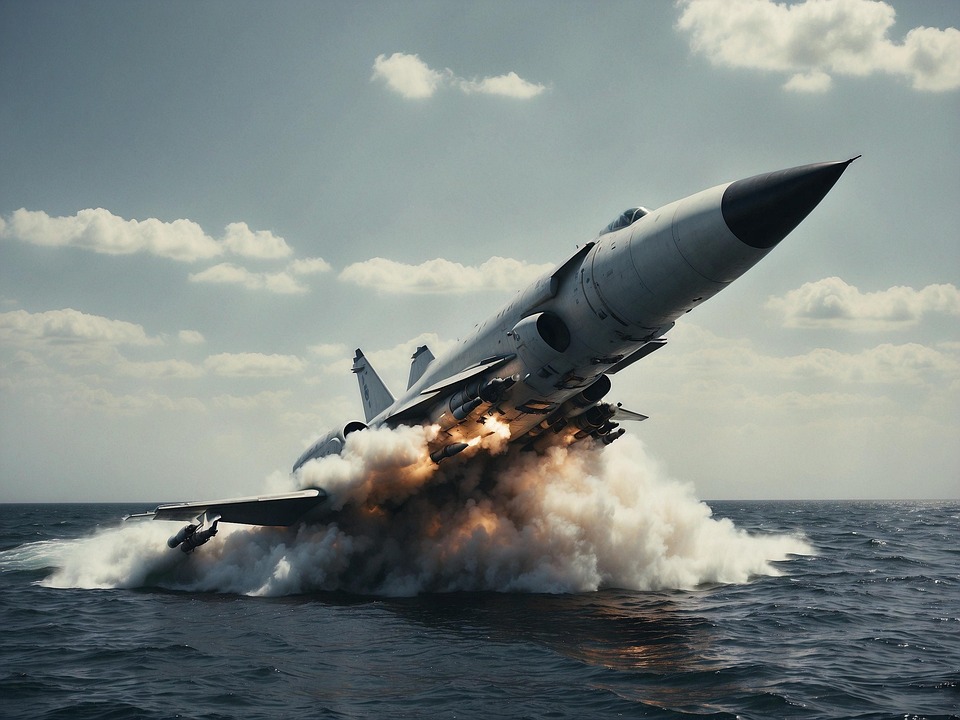
In the world of modern military technology, one of the most significant advancements has been the development of hypersonic missiles. These advanced weapons are capable of reaching speeds that were once considered unattainable, crossing the Earth in less than 10 minutes. The introduction of these high-speed projectiles has completely transformed the battlefield, introducing a new layer of complexity to global defense strategies. Today, countries like Russia, China, and the United States are racing to develop and deploy these missiles. With speeds over Mach 20 and the ability to change course mid-flight, these missiles are not only faster than any missile we have seen before but also virtually impossible to intercept. In this article, we’ll take a deep dive into what hypersonic missiles are, how they work, the countries leading this race, and the massive implications they have for the future of warfare.
What Are Hypersonic Missiles?
Hypersonic missiles represent a new era in weaponry, capable of traveling at speeds greater than Mach 5 (the speed of sound is approximately Mach 1). However, these missiles go far beyond Mach 5, often exceeding Mach 20 — around 15,000 mph. These high-speed weapons are designed to travel faster than traditional ballistic missiles, making them harder to detect, and almost impossible to intercept with current defense systems. Unlike ballistic missiles that follow a predictable parabolic trajectory, hypersonic missiles can maneuver mid-flight, dramatically reducing their chances of being intercepted by existing missile defense systems. This combination of speed, agility, and unpredictability makes hypersonic missiles a game-changer in modern defense technology
How Hypersonic Missiles Work?
At the heart of hypersonic missile technology is the advanced propulsion systems that enable them to travel at extraordinary speeds. Unlike conventional jet engines that propel aircraft, hypersonic missiles use a combination of air-breathing engines (scramjets) and rocket boosters to reach their incredible velocities. These missiles are designed to fly within the atmosphere for much of their journey, unlike traditional space-bound missiles. By remaining in the atmosphere, they can take advantage of the aerodynamic forces to enhance their speed and maneuverability, which gives them the element of surprise in any potential military conflict. This high-speed, low-altitude flight path allows them to avoid detection and make their way through enemy defenses without triggering warning systems.
Speed and Range of Hypersonic Missiles
The true power of hypersonic missiles lies in their speed and range. Unlike conventional missiles that can take hours to reach their target, hypersonic missiles are designed to hit their targets in minutes — making them capable of crossing the globe in under 10 minutes. This speed makes them an incredible tool for first-strike capabilities. Additionally, their range and speed enable them to strike global targets with very little notice, bypassing conventional defense measures and completely changing the strategic dynamics of modern warfare. This rapid response capability means that nations now need to rethink their approach to global defense and consider new ways to safeguard against this incredibly fast and highly maneuverable threat.
Nations Leading the Race for Hypersonic Weapons
Several nations are at the forefront of hypersonic missile development, each investing heavily in research, testing, and deployment. Russia was one of the first to deploy hypersonic weapons into its arsenal, with the Avangard hypersonic glide vehicle already being operational. This missile system can travel at Mach 20 speeds, making it nearly impossible for current missile defense systems to intercept. China has developed its own hypersonic glide vehicle, the DF-ZF, which has shown remarkable capabilities during tests, capable of maneuvering mid-flight to avoid defense systems. The United States is also a major player in this race, with various programs focused on developing hypersonic systems that combine speed and precision. Nations around the world are competing to not only develop these weapons but also to ensure their dominance in the hypersonic arms race.
The Role of Artificial Intelligence in Hypersonic Missiles
One of the key advancements in the development of hypersonic missiles is the integration of artificial intelligence (AI). AI is used to control and guide the missile’s flight path in real time, ensuring that the missile can adjust its trajectory if necessary. With AI, the missile can navigate through changing environments, dodge interception attempts, and even re-target if the situation requires. The use of AI algorithms allows these missiles to be highly autonomous, making decisions on their own during flight without the need for human intervention. This level of sophistication is a major reason why hypersonic weapons are considered unstoppable by traditional missile defense systems.
The Unstoppable Nature of Hypersonic Missiles
The unstoppable nature of hypersonic missiles comes from their combination of speed and agility. Traditional ballistic missiles follow a fixed, predictable path, making it relatively easy for defense systems to predict and intercept them. Hypersonic missiles, on the other hand, can change course mid-flight, evading radar detection and throwing off traditional missile defense systems. As they travel at speeds many times faster than the speed of sound, they are virtually invisible to most early-warning systems, further enhancing their lethality. The combination of high speed, maneuverability, and AI-guided precision makes them a force that is difficult, if not impossible, to counter.
How Hypersonic Missiles Are Reshaping Global Defense
The emergence of hypersonic missile technology has sparked a paradigm shift in global defense strategies. Traditional missile defense systems like the Patriot missile system or THAAD (Terminal High Altitude Area Defense) are simply too slow to intercept hypersonic threats. This has led to a global arms race, where nations are scrambling to develop defense systems capable of countering hypersonic weapons. In response to these threats, space-based defense systems are being developed, as well as laser weapons and directed-energy systems that could potentially intercept hypersonic missiles before they reach their target. As defense strategies evolve, the ability to counter hypersonic weapons will be a crucial factor in determining the balance of power in global military dynamics.
Hypersonic Missiles and Nuclear Warfare
One of the most concerning aspects of hypersonic missile technology is its potential to be used in nuclear warfare. Due to their speed, maneuverability, and precision, these missiles could be used to deliver nuclear payloads to targets with little or no warning. The ability to bypass traditional missile defense systems means that nuclear first-strike capabilities are now more feasible than ever before. The integration of nuclear warheads with hypersonic delivery systems raises serious concerns about the future of nuclear deterrence and the stability of global peace. As hypersonic missile systems continue to evolve, their potential to alter the dynamics of global security becomes a matter of serious international concern.
The Race for Hypersonic Defense Systems
As the threat of hypersonic missiles becomes more imminent, nations are also focusing on developing countermeasures and defensive technologies. The United States, for example, is investing in space-based defense systems that will be able to track and intercept hypersonic missiles during their flight. These systems would rely on advanced satellites equipped with high-resolution infrared sensors to detect the heat signature of hypersonic missiles. Other countries, such as Russia and China, are developing their own directed-energy weapons (such as lasers) that can disable hypersonic projectiles mid-flight. As the threat grows, so too will the development of counter-hypersonic technologies.
What Does the Future Hold for Hypersonic Technology?
Looking to the future, hypersonic missile technology is only set to become more advanced. As AI, propulsion technology, and materials science improve, these weapons will become even faster, more accurate, and harder to defend against. Nations will continue to invest heavily in both offensive hypersonic systems and defense mechanisms to counter them. The next decade could very well see a dramatic increase in the deployment of these weapons, as nations seek to dominate the high-speed, maneuverable missile race. The rise of hypersonic warfare will likely reshape the very nature of military conflict in ways we cannot yet fully comprehend.
Conclusion
Hypersonic missiles are not just a technological marvel; they represent a fundamental shift in the future of global warfare. With speeds that leave current defense systems in the dust, these missiles are virtually unstoppable, rendering traditional missile defense systems nearly obsolete. As the race for hypersonic dominance continues, the world will have to contend with the implications of these high-speed weapons in the context of international security. From AI-guided precision to nuclear warfare capabilities, the emergence of hypersonic missiles has the potential to change the balance of power globally. The next few years will be crucial in determining how nations adapt to this new reality and what role hypersonic technology will play in the future of warfare.
Call to Action (CTA):
Share this article with friends and colleagues to keep them informed about the rise of hypersonic missile technology.
Leave a comment below to let us know your thoughts on how hypersonic weapons will change the future of warfare.
Subscribe for more articles about military tech, AI, and global defense trends.


