High Performance Computing for Scientific Breakthroughs
Dfluxspace Research Team • 2026-03-01T00:00:00.000Z
High Performance Computing (HPC) has become one of the most powerful tools driving modern scientific discovery. From predicting climate change to discovering new medicines and exploring the universe, HPC systems enable researchers to process massive datasets and run complex simulations that were once impossible. As computing power continues to grow through advanced processors, supercomputers, and parallel processing architectures, high performance computing is playing an essential role in solving some of humanity’s most challenging problems. Today, governments, research institutions, and technology companies are investing heavily in HPC infrastructure to accelerate innovation and enable the next generation of scientific breakthroughs.
Understanding High Performance Computing
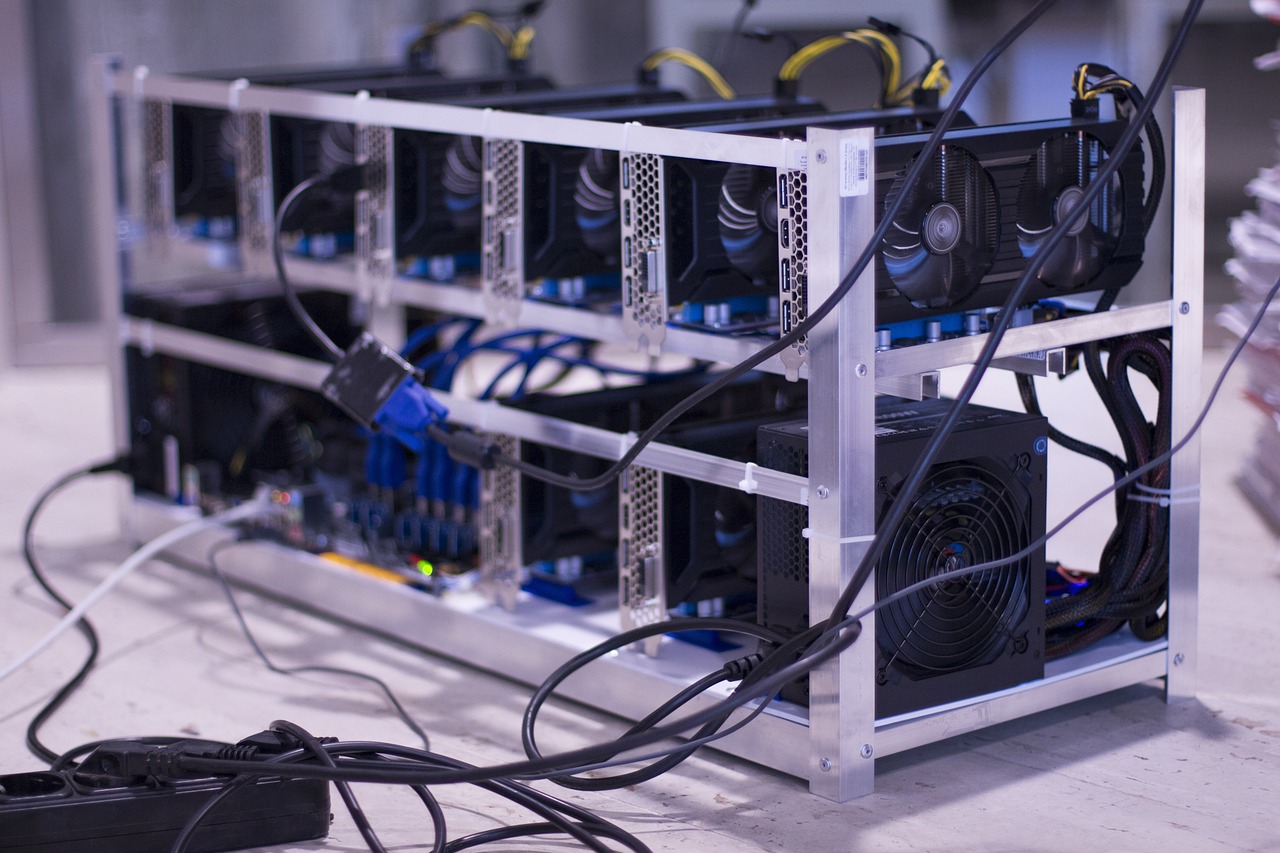
High Performance Computing, commonly known as HPC, refers to the use of powerful computing systems designed to perform extremely complex calculations at very high speeds. Unlike traditional computers used for everyday tasks, HPC systems combine thousands or even millions of processors that work together simultaneously to solve computationally intensive problems.
These systems are capable of processing enormous datasets and performing trillions of calculations per second. HPC environments rely on specialized hardware, optimized software, and advanced networking technologies to distribute workloads efficiently across large clusters of computing nodes. As a result, researchers can run simulations and analyze data that would take years to process on conventional computers.
HPC technology has become essential for many scientific disciplines. Fields such as physics, climate science, bioinformatics, engineering, and astrophysics depend heavily on high performance computing to conduct experiments and explore complex phenomena that cannot be easily tested in real-world environments.
The Evolution of Supercomputing Technology
The concept of supercomputing has evolved significantly since the early days of computing. In the mid-20th century, the first supercomputers were built to perform specialized scientific calculations. These machines were large, expensive, and accessible only to government laboratories and major research institutions.
Over time, technological advances in semiconductor manufacturing, processor architecture, and parallel computing have dramatically increased computing power. Modern supercomputers now contain tens of thousands of interconnected processors working together to perform calculations at extraordinary speeds.
Today, some of the most advanced supercomputers can achieve performance measured in petaflops and exaflops. A petaflop represents one quadrillion calculations per second, while exascale computing represents a thousand times that amount. These advancements allow researchers to simulate complex systems such as climate patterns, molecular interactions, and cosmic phenomena with unprecedented accuracy.
The evolution of HPC technology continues to push the boundaries of scientific exploration and computational capability.
Parallel Computing and Distributed Processing
One of the key principles behind high performance computing is parallel computing. Instead of processing tasks sequentially, HPC systems divide large problems into smaller pieces that can be solved simultaneously across multiple processors. This approach dramatically increases computational speed and efficiency.
In parallel computing environments, tasks are distributed across clusters of computing nodes connected through high-speed networks. Each node processes a portion of the workload and communicates with other nodes to exchange data and coordinate results. This collaborative processing allows HPC systems to tackle extremely complex calculations in a fraction of the time required by single-processor systems.
Distributed processing is particularly important for large-scale simulations and data analysis tasks. For example, weather forecasting models require massive computational resources to analyze atmospheric data from around the world. HPC clusters enable meteorologists to run detailed simulations that help predict storms, hurricanes, and climate patterns more accurately.
The combination of parallel computing and distributed architectures forms the foundation of modern HPC systems.
High Performance Computing in Scientific Research
Scientific research is one of the primary drivers behind the development of high performance computing. Researchers rely on HPC systems to simulate natural processes, analyze experimental data, and explore theoretical models that require immense computational power.
In physics research, HPC systems are used to simulate particle collisions and analyze data generated by large experiments such as particle accelerators. These simulations help scientists understand the fundamental forces and particles that make up the universe.
In chemistry and materials science, HPC simulations allow researchers to study molecular interactions and predict the properties of new materials. These capabilities accelerate the development of advanced batteries, sustainable energy technologies, and innovative manufacturing materials.
HPC systems also play a vital role in genomics and bioinformatics. Scientists analyze massive genomic datasets to understand genetic variations, identify disease markers, and develop personalized medical treatments.
Without high performance computing, many of these scientific breakthroughs would be impossible due to the sheer volume of data and complexity involved.
Medical Research and Drug Discovery
One of the most impactful applications of high performance computing is in medical research and pharmaceutical development. HPC systems enable scientists to simulate biological processes at the molecular level, providing insights into how diseases develop and how potential treatments might interact with the human body.
Drug discovery traditionally involves years of laboratory testing and experimentation. With HPC simulations, researchers can analyze millions of chemical compounds and predict which ones are most likely to be effective as medicines. This process significantly reduces the time and cost required to develop new drugs.
During global health crises, high performance computing plays a crucial role in accelerating vaccine research and analyzing epidemiological data. Scientists can simulate virus behavior, model infection spread, and evaluate potential treatments using powerful computational resources.
The integration of artificial intelligence with HPC systems is further enhancing the speed and accuracy of medical research.
Climate Modeling and Environmental Research
Climate change is one of the most pressing challenges facing humanity, and high performance computing is essential for understanding and predicting environmental changes. Climate models require enormous computational power to analyze atmospheric, oceanic, and geological data collected from around the world.
HPC systems allow scientists to simulate climate dynamics over decades or even centuries. These simulations help researchers understand how greenhouse gas emissions, ocean currents, and atmospheric interactions influence global climate patterns.
Advanced climate models provide critical information for policymakers and environmental organizations. Accurate predictions help governments develop strategies for climate mitigation, disaster preparedness, and sustainable resource management.
In addition to climate modeling, HPC systems support research in fields such as earthquake prediction, ecosystem analysis, and renewable energy optimization.
Artificial Intelligence and High Performance Computing
The rapid growth of artificial intelligence has significantly increased the demand for high performance computing infrastructure. Training advanced AI models requires enormous computational resources and access to massive datasets.
HPC systems equipped with powerful GPUs and specialized AI accelerators enable researchers to train deep learning models more efficiently. These models are used in applications such as natural language processing, image recognition, robotics, and autonomous systems.
The integration of AI with HPC also improves system optimization. Machine learning algorithms can analyze performance data and automatically adjust resource allocation to maximize efficiency. This combination of AI and HPC is creating a new generation of intelligent computing platforms capable of solving complex scientific problems.
As AI technologies continue to evolve, HPC will remain a critical component supporting large-scale machine learning research.
Exascale Computing and the Future of HPC
The next major milestone in high performance computing is the development of exascale systems capable of performing more than one quintillion calculations per second. Exascale computing represents a thousand-fold increase over early petascale systems and will enable simulations of unprecedented scale and complexity.
Exascale supercomputers will allow scientists to model entire ecosystems, simulate advanced nuclear reactions, and explore detailed cosmic phenomena such as galaxy formation and black hole interactions. These capabilities will significantly expand our understanding of the natural world.
Developing exascale computing systems requires major innovations in processor design, memory architecture, cooling technologies, and energy efficiency. Engineers must design systems capable of delivering extreme computational power while managing heat generation and power consumption.
Despite these challenges, several countries and research institutions are actively developing exascale systems that will shape the future of scientific computing.
Challenges Facing High Performance Computing
While high performance computing offers extraordinary capabilities, it also presents significant technical and operational challenges. One of the biggest challenges is energy consumption. Large supercomputing facilities require enormous amounts of electricity to power thousands of processors and cooling systems.
Another challenge is the complexity of software development for parallel computing environments. Scientists must design algorithms that efficiently distribute workloads across multiple processors while minimizing communication delays between computing nodes.
Data management is also a major concern. HPC systems generate and process massive volumes of data that must be stored, analyzed, and secured. Managing this data requires advanced storage architectures and high-speed data transfer technologies.
Addressing these challenges will require continued innovation in hardware design, software optimization, and energy-efficient computing technologies.
The Global Impact of High Performance Computing
High performance computing has become a strategic asset for nations and research organizations worldwide. Governments invest heavily in supercomputing infrastructure to support scientific research, national security, and technological innovation.
HPC systems enable breakthroughs in aerospace engineering, nuclear research, artificial intelligence development, and advanced manufacturing. These capabilities contribute to economic growth and technological leadership.
International collaboration also plays an important role in HPC development. Researchers from different countries often share computational resources and collaborate on large-scale scientific projects that require enormous computing power.
As global challenges such as climate change, energy sustainability, and public health become more complex, high performance computing will remain an essential tool for developing innovative solutions.
Ultimately, high performance computing represents one of the most powerful engines of scientific discovery in the modern world. By enabling researchers to analyze vast datasets and simulate complex systems, HPC continues to drive breakthroughs that expand our understanding of science, technology, and the universe.