How to Choose the Right Baby Stroller
Choosing a baby stroller can feel surprisingly complicated because there are many models, sizes, folding systems, wheel designs, seat positions, safety features, and price ranges. A stroller that looks attractive in a product photograph may not be practical for your everyday routine. The best stroller is usually the one that matches the child's age and developmental stage, the places you travel, the amount of storage you need, and the way you expect to use it every day.
Parents may compare lightweight strollers, full-size strollers, travel systems, jogging strollers, compact city models, double strollers, and reversible-seat designs. Each category solves a different problem. Instead of choosing based only on appearance or the number of features listed on the box, it helps to evaluate safety, comfort, stability, maneuverability, size, weight, folding mechanism, braking system, harness, recline, canopy, storage, and compatibility with other baby equipment.
This guide explains how to choose a baby stroller in a practical way. It covers the most important safety checks, age and weight considerations, stroller types, wheel and suspension choices, seat comfort, harness systems, folding and transportation, storage, weather protection, maintenance, common buying mistakes, and questions to ask before purchasing. Product requirements and safety standards can vary by country, so always check the current manufacturer's instructions and applicable local safety requirements for the specific stroller you are considering.
Start With Your Baby's Age and Developmental Stage
The first question to ask is not which stroller looks best. It is whether the stroller is appropriate for your baby at the current developmental stage.
Young infants have different support requirements from older babies who can sit independently. Some stroller seats are designed for babies who can sit upright, while others can recline substantially or are compatible with a separately approved infant carrier or bassinet. Never assume that a stroller seat is suitable for a newborn simply because the seat reclines.
Read the manufacturer's minimum age, minimum weight, maximum weight, height, and usage instructions. If the manufacturer specifies that the upright seat is intended for older babies, follow that guidance.
A stroller should support the child appropriately without forcing a young baby into a position they are not developmentally ready to maintain.
Think About How You Will Actually Use the Stroller
Your daily routine should strongly influence your choice. A stroller used mostly inside shopping centers has different requirements from one used on sidewalks, public transportation, parks, or uneven paths.
If you live in a city and frequently use elevators, buses, trains, or narrow store aisles, a compact and relatively lightweight stroller may be especially useful. If you regularly walk longer distances on rough sidewalks, larger wheels and better suspension may matter more.
If the stroller will spend most of its time in a car, check whether it fits comfortably in the vehicle's cargo area after folding. If you frequently carry it up stairs, weight becomes a major consideration.
The right stroller is therefore not necessarily the stroller with the most features. It is the stroller whose features solve the problems you encounter most often.
Understand the Main Types of Baby Strollers
Strollers are available in several broad categories. Understanding the differences makes comparison easier.
Full-Size Strollers
Full-size strollers generally offer a larger frame, more substantial wheels, more storage, and additional comfort features. They can be suitable for families who want one primary stroller for everyday use.
The trade-off is that they can be heavier and take up more storage space than compact models.
Lightweight Strollers
Lightweight strollers prioritize portability. They are often easier to lift, carry, and store.
They can be convenient for travel and quick trips, but some lightweight designs provide less suspension, smaller storage baskets, or fewer seating configurations.
Travel Systems
A travel system combines a stroller with a compatible infant car seat or carrier. The main advantage is convenience because parents can transfer a sleeping infant between the vehicle and stroller without necessarily moving the baby directly into a stroller seat.
Compatibility is critical. Only use components that the manufacturer specifically identifies as compatible. Never improvise adapters or attachment methods.
Jogging Strollers
Jogging strollers are designed for active use and commonly feature larger wheels, a more substantial frame, and a design intended for controlled movement over suitable surfaces.
A jogging stroller is not automatically appropriate for a young infant. Follow the manufacturer's minimum age and activity instructions, particularly regarding running rather than ordinary walking.
Double Strollers
Double strollers are designed for two children. They can be configured side by side or one behind another depending on the design.
They can be useful for twins or siblings with a small age difference, but their larger dimensions can make elevators, doors, sidewalks, and vehicle storage more difficult.
Safety Should Come Before Convenience
A stroller is a piece of equipment used to transport a child, so safety should be the first filter when comparing models.
Look for a secure restraint system, reliable brakes, stable construction, appropriate seating support, and clear manufacturer instructions. Check that the stroller does not have obvious damaged, loose, sharp, or unstable components.
Use the stroller only within its stated weight and age limits. Avoid adding accessories or attachments that are not approved for the specific model.
A long list of convenience features cannot compensate for poor fit, incorrect use, or failure to follow safety instructions.
Check the Harness System
The harness is one of the most important parts of the stroller because it helps keep the child positioned safely in the seat.
Many modern strollers use a five-point harness that secures the child around the shoulders and hips and between the legs. The exact design varies by model.
The harness should be adjusted according to the manufacturer's instructions and fit the child appropriately. It should not be so loose that the child can easily slip out of the restraint.
Check the buckle regularly. It should engage properly and should not open unintentionally during normal use.
Evaluate the Brakes
A stroller's braking system should be easy for the caregiver to operate and should hold the stroller securely when parked.
Test the brake before purchasing if possible. Engage it on a flat surface and gently attempt to move the stroller. The stroller should remain stationary when the brake is properly engaged.
Always apply the brake whenever you stop, particularly when you are not actively holding the stroller.
Do not rely on the stroller's brake alone on steep slopes or unstable surfaces unless the manufacturer specifically states that the stroller is designed for such use.
Look for a Stable Frame
A stable frame helps prevent unwanted tipping during ordinary use. Examine how the stroller behaves when turning, stopping, and navigating small changes in surface level.
A wider base can sometimes improve stability, although overall design matters more than one dimension. Check whether the frame feels secure and whether the seat remains firmly attached when properly installed.
A stroller should not become unstable simply because the storage basket contains ordinary permitted items. Follow the manufacturer's instructions regarding weight distribution and storage.
Why Wheel Size Matters
Wheel size can affect how easily a stroller moves over different surfaces. Smaller wheels can make a stroller compact and convenient, while larger wheels can make uneven surfaces easier to navigate.
For smooth indoor floors and well-maintained sidewalks, small or medium wheels may be sufficient. For parks, gravel paths, or uneven pavement, larger wheels may provide a smoother experience.
Consider the actual surfaces you encounter rather than choosing wheels based solely on appearance.
Check Wheel Swivel and Maneuverability
Swiveling front wheels can make a stroller easier to turn in stores, narrow spaces, and crowded areas. Lockable front wheels can provide more directional stability on certain surfaces.
Test the stroller with one hand if possible. Push it forward, make a tight turn, reverse it, and navigate around an imaginary obstacle.
If steering feels difficult in a showroom, it is unlikely to become easier when the stroller is loaded with a child and everyday supplies.
Consider Suspension
Suspension can reduce the effect of bumps and uneven surfaces by allowing the wheels and frame to absorb some movement.
Families who mainly use a stroller indoors may not need sophisticated suspension. Parents who walk frequently on rough sidewalks or park paths may appreciate it more.
Remember that suspension does not make every stroller appropriate for every terrain. Follow the manufacturer's intended-use guidance.
Choose a Comfortable Seat
Your child may spend substantial time in the stroller, so the seat should provide appropriate support and cushioning.
Look for a seat with suitable padding, supportive sides, a comfortable harness, and materials that are practical to clean.
A soft-looking seat is not necessarily better if it causes excessive heat or makes the child sink into an unsupported position.
Consider the seat dimensions as your child grows. A stroller that fits a young baby comfortably may become cramped later.
Check the Recline
A reclining seat can provide flexibility for children who need different positions while riding. The appropriate recline depends on the child's age and the manufacturer's instructions.
Check how easily the recline mechanism operates. A caregiver may need to adjust it while holding a child or while standing in a crowded location.
Make sure the mechanism locks securely into the selected position.
Canopy and Sun Protection
A stroller canopy can protect a child from direct sunlight and provide a more comfortable environment. Look for a canopy that is large enough for practical coverage and easy to adjust.
Some models include ventilation panels that allow airflow while maintaining shade. This can be useful in warm climates.
Do not cover a stroller with a blanket or other material in a way that blocks airflow or creates excessive heat. Use products as intended by the manufacturer.
Think About Ventilation
Good ventilation becomes particularly important in warm weather. A stroller can become uncomfortable when a child is enclosed beneath a large canopy with limited airflow.
Look for appropriate ventilation openings and breathable materials. Check that airflow is not blocked by accessories or incorrectly installed covers.
Parents should also monitor the child for signs of overheating and avoid prolonged exposure to excessive heat.
Check the Storage Basket
Storage can make a stroller much more practical. A basket underneath the seat can carry diapers, wipes, clothing, bottles, shopping items, or other permitted supplies.
Look at both capacity and accessibility. A large basket is less useful if you cannot reach it when the seat is reclined.
Never exceed the manufacturer's stated storage weight limit. Avoid hanging heavy bags from the handle unless the stroller is specifically designed and rated for that use because added weight can affect stability.
Handlebar Height and Comfort
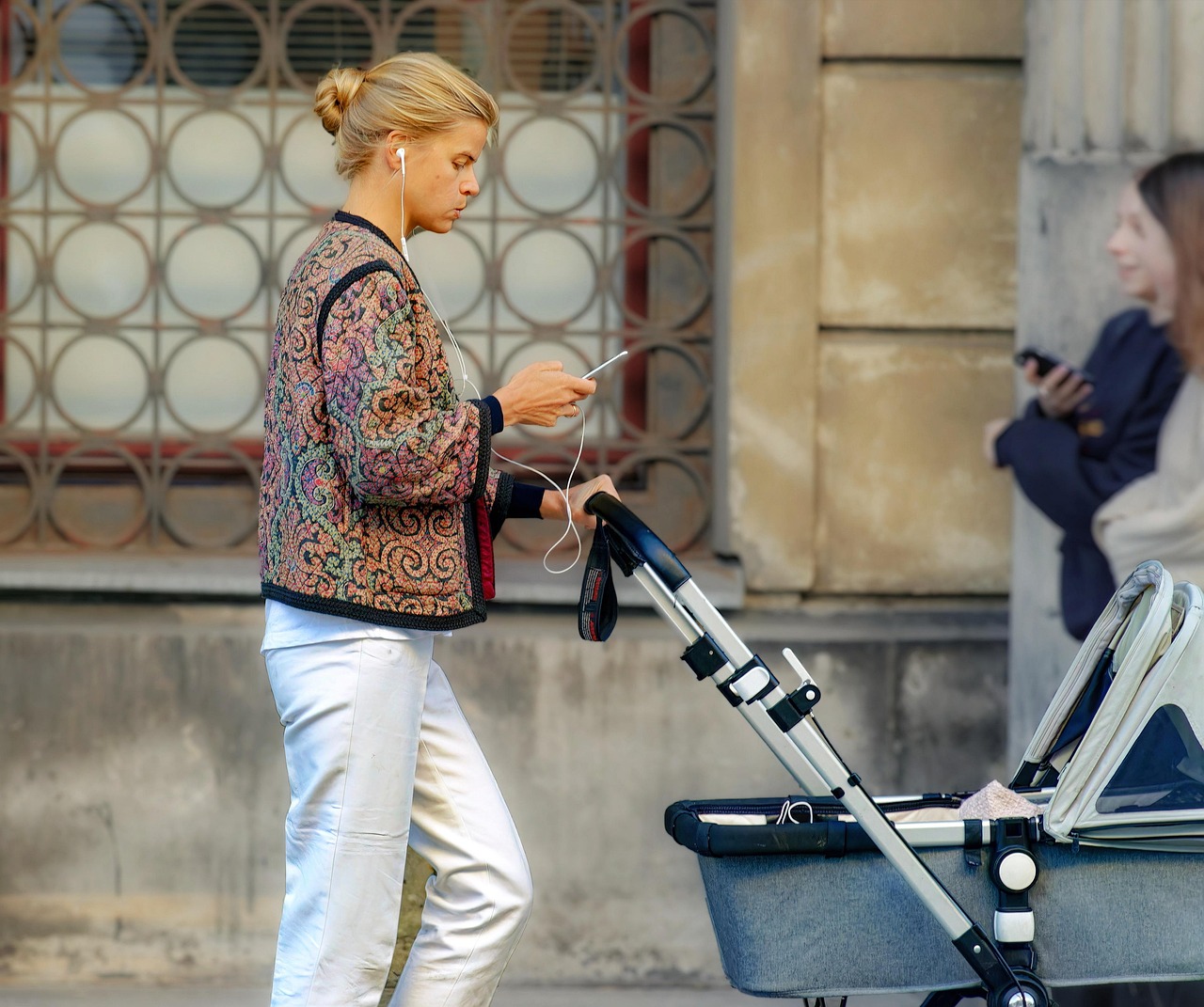
The handlebar should be comfortable for the primary caregiver. If several adults will regularly use the stroller, an adjustable handlebar can make the stroller easier to share.
Push the stroller while standing naturally. If you have to bend forward or lift your shoulders unnaturally, the handlebar may not be a good fit.
Small ergonomic details become much more noticeable after repeated daily use.
Check the Stroller's Fold
A stroller that folds easily can save significant time. Try the folding mechanism yourself rather than relying on a salesperson's demonstration.
Ask whether the stroller can be folded with one hand, whether both hands are required, and whether the seat needs to be removed first.
Practice opening it again. A folding system that seems impressive but is confusing in practice can become frustrating when you are traveling with a baby and bags.
Measure the Folded Size
Do not assume that a compact-looking stroller will fit your vehicle or storage area. Measure the folded dimensions and compare them with the actual space available.
Measure the trunk opening as well as the trunk's internal dimensions. A stroller can technically fit inside a trunk while still being difficult to insert through a narrow opening.
If you live in an apartment, also consider hallway, elevator, doorway, and storage-cupboard dimensions.
Consider Stroller Weight
Stroller weight affects daily convenience. A heavier stroller may feel stable but can be difficult to carry up stairs or lift into a vehicle.
A very lightweight stroller may be easier to transport but may offer fewer features or less performance on rough surfaces.
Think about the total load you will handle. The stroller is only one part of the equation; adding a child, diaper bag, and other permitted items increases the effort required to push and lift it.
Check Door and Elevator Compatibility
If you regularly use elevators or narrow doors, stroller width matters. A double stroller or large full-size model may not fit comfortably through every entrance.
Measure the narrowest doorway you regularly use. Also consider elevators, public transportation entrances, store aisles, and apartment corridors.
A stroller that works perfectly outdoors can become inconvenient if it cannot navigate your normal indoor spaces.
Travel Considerations
If you travel frequently, prioritize folding size, weight, durability, and ease of transport. A compact travel stroller may be more practical than a large full-size model.
Before flying, check the current airline's stroller policies rather than relying on general assumptions. Airlines can have different rules about gate checking, cabin storage, size, and packaging.
Protect the stroller appropriately when required and follow the airline's handling instructions.
Car Seat Compatibility
If you plan to use an infant car seat with the stroller, verify exact compatibility. The car seat and stroller should be designed to work together according to the manufacturer.
Do not assume that two products from the same brand are automatically compatible. Check the model numbers and approved adapter information.
Most importantly, remember that a stroller attachment system does not replace the correct installation of a car seat in a vehicle.
Bassinet Compatibility
Some stroller systems support a bassinet attachment designed for young infants. If this option matters to you, check whether the bassinet is included or sold separately.
Follow the manufacturer's instructions regarding age, weight, sleep use, supervision, and appropriate positioning. A stroller accessory should never be assumed to be a safe sleep environment unless the manufacturer specifically states that it is designed and approved for that purpose.
One-Handed Operation
One-handed steering can be convenient when a caregiver needs to hold another item or manage a child. Test the stroller before buying because the phrase one-hand fold or one-hand steering can describe different mechanisms.
Try pushing the stroller while turning, stopping, and making small corrections with one hand.
Even if you prefer one-handed operation, confirm that the stroller remains easy to control with both hands.
Adjustable Footrest
An adjustable footrest can improve comfort as a child grows. It can support the legs in a more suitable position and make longer rides more comfortable.
Check that the footrest moves securely and does not create easily accessible pinch points. Follow the manufacturer's adjustment instructions.
Materials and Climate
The climate where you live should influence your choice. Warm environments may benefit from breathable fabrics and good ventilation, while colder climates may require suitable clothing and manufacturer-approved accessories.
Do not rely on aftermarket covers to solve every weather problem. Some covers can affect ventilation, visibility, or access to the child.
Choose materials that are durable and reasonably easy to clean because baby equipment inevitably encounters spills, food, dirt, and other messes.
Cleaning and Maintenance
Regular maintenance helps keep a stroller functioning properly. Check wheels, brakes, harnesses, folding joints, fasteners, and other moving parts according to the manufacturer's instructions.
Clean fabrics using the recommended method. Avoid harsh chemicals that could damage materials or leave residues.
Keep the wheels free from excessive dirt and inspect them for unusual wear. If a component becomes damaged, stop using the stroller until it has been properly repaired or replaced.
Inspect a Used Baby Stroller Carefully
A second-hand stroller can be less expensive, but condition and safety history matter. Ask for the model name and manufacturer information so you can identify the correct instructions and check whether safety notices or recalls apply in your market.
Inspect the frame for cracks, bending, corrosion, or other damage. Test the brakes, harness, wheels, folding mechanism, seat attachment, and recline system.
A missing instruction manual is not necessarily a reason to reject a stroller, but you should obtain the correct documentation before using it.
Check for Recalls and Safety Notices
Before buying a stroller, particularly a used one, check the manufacturer's current safety information and the relevant consumer-product safety authority in your country.
Recalls can involve specific model numbers, production periods, components, or accessories. Do not assume that an older product is safe simply because it appears to be in good physical condition.
Keep the stroller's model and serial information available so that you can identify the exact product.
Do Not Overload the Handle
One common stroller mistake is hanging heavy shopping bags from the handle. This can change the stroller's center of gravity and increase the risk of tipping, depending on the design.
Use the designated storage basket and follow the manufacturer's maximum storage limits.
If you need additional storage, use only accessories that are approved for the specific stroller and do not exceed the recommended load.
Avoid Unapproved Accessories
Stroller accessories can include cup holders, organizers, toys, boards, blankets, covers, and other products. While some can be useful, compatibility and weight matter.
An accessory that attaches securely to one stroller may not be appropriate for another. Avoid modifying the frame or using improvised attachments.
Read the accessory manufacturer's instructions and confirm compatibility before use.
Think About the Child's Visibility
Some parents prefer a stroller that allows the child to face them, while others prefer forward-facing configurations. Reversible seats can offer both options on compatible models.
Parent-facing configurations can make interaction easier, while forward-facing configurations may give an older child a wider view of the surroundings.
Choose based on the child's developmental stage, manufacturer guidance, and your everyday preferences.
Storage at Home
Measure where you plan to keep the stroller when it is not being used. Consider whether it needs to stand upright, lie flat, or remain folded.
Keeping a stroller near an entrance can be convenient, but make sure it does not block emergency exits, stairways, or common walkways.
Dry the stroller appropriately after exposure to rain before storing it for long periods, following the manufacturer's care guidance.
How Much Should You Spend?
There is no single correct stroller budget. A higher price can provide additional features, materials, compatibility options, or convenience, but expensive does not automatically mean safer or better for every family.
Start by identifying essential requirements. Then compare products based on safety, fit, usability, durability, and total cost rather than focusing only on the purchase price.
Remember to include the price of required accessories such as compatible bassinets, adapters, rain covers, or other components if they are necessary for your planned setup.
Common Baby Stroller Buying Mistakes
One common mistake is buying based solely on appearance. A stroller can look excellent while being inconvenient to fold, heavy to lift, or difficult to maneuver.
Another mistake is ignoring the child's age and the manufacturer's usage limits.
Parents can also underestimate storage requirements, doorway width, vehicle space, or the importance of wheel performance.
Finally, buying many accessories before understanding what is actually needed can increase cost and clutter without improving everyday use.
Questions to Ask Before Buying
Before making a final decision, ask whether the stroller is appropriate for your child's current age and size, whether it can accommodate future growth, how much it weighs, how it folds, and whether it fits your vehicle.
Also ask whether the brakes are easy to use, whether the harness is adjustable, whether the seat reclines appropriately, whether the wheels match your normal surfaces, and whether replacement parts are available.
If purchasing online, carefully review the manufacturer's specifications rather than relying only on customer photographs or short product descriptions.
A Practical Stroller Comparison Checklist
For safety, check the harness, brakes, frame stability, seat attachment, age limits, weight limits, and manufacturer instructions.
For comfort, check padding, recline, footrest, canopy, ventilation, and fabric.
For convenience, check weight, fold mechanism, folded dimensions, storage basket, handlebar, wheel maneuverability, and cleaning requirements.
For transportation, check car compatibility, travel size, public-transport practicality, and any relevant airline requirements.
For long-term value, check durability, warranty terms, replacement parts, accessories, and service availability.
Testing a Stroller Before Purchase
If you can visit a store, spend several minutes testing the stroller instead of simply pushing it a few feet. Adjust the handlebar, apply the brake, fold it, unfold it, recline the seat, adjust the harness, and inspect the storage area.
Push it around corners and over different floor surfaces. If possible, place an appropriate load in the stroller to simulate real use without exceeding its limits.
The goal is to discover whether the stroller is intuitive and comfortable for the caregiver before purchasing it.
Buying a Stroller Online
Online shopping provides a large selection, but it requires careful specification checking. Read the complete product description and verify the exact model number.
Look for manufacturer documentation and compare dimensions rather than relying on words such as compact, lightweight, premium, or all-terrain.
Check the retailer's return policy, warranty information, delivery condition, and replacement-parts availability before ordering.
When a Compact Stroller Makes Sense
A compact stroller can be a strong choice for families with limited storage space or frequent travel. It may be easier to carry onto public transportation, store in a small apartment, or place in a vehicle.
The compromise can be smaller wheels, reduced storage, or fewer adjustments. Decide whether those compromises matter based on your actual routine.
When a Full-Size Stroller Makes Sense
A full-size stroller can make sense when the stroller is your primary transportation system for daily walks. Larger wheels, greater storage, more substantial suspension, and additional adjustment options can improve everyday convenience.
The trade-off is greater weight and a larger folded footprint.
When a Double Stroller Makes Sense
Families with twins or children close in age may find a double stroller practical. Before choosing one, measure doors, elevators, vehicle storage, and other narrow spaces.
Compare the seating configurations carefully. Side-by-side models may provide similar access for both children but can be wider, while tandem designs can be narrower but longer.
When a Jogging Stroller Makes Sense
If running is a major part of your routine, a jogging stroller may be appropriate once your child meets the manufacturer's requirements for that activity.
Do not use a regular stroller for running simply because it has wheels. Running introduces forces and speeds that require a stroller specifically designed for the activity.
Weather and Rain Protection
Rain protection can be useful, but use only covers designed and approved for the stroller. Make sure ventilation remains adequate and that the child's face is not obstructed.
After wet conditions, allow appropriate components to dry according to the manufacturer's instructions to reduce odors, mold, corrosion, or material deterioration.
How to Keep a Stroller Safe During Daily Use
Before each use, make a quick visual inspection. Check that the wheels are attached, the brake works, the harness is correctly positioned, and the seat or bassinet is securely attached.
Do not continue using the stroller if you notice a damaged frame, failed brake, broken harness component, loose wheel, or other safety-critical problem.
Regular quick checks take little time and can identify problems before they become more serious.
How to Choose Between Two Similar Strollers
When two models appear similar, compare the features that affect daily use rather than minor cosmetic differences.
Compare weight, folded size, wheel performance, braking, harness adjustment, seat comfort, storage, warranty, repairability, and total cost.
If one stroller solves your most frequent practical problem while the other only offers additional features you are unlikely to use, the simpler model may be the better choice.
The Best Stroller Is the One That Fits Your Routine
There is no universally perfect baby stroller. A stroller that works extremely well for a frequent traveler may be unnecessary for a family that mostly walks around a neighborhood. Likewise, a large all-purpose stroller may be ideal for one household and frustrating for another.
The most useful approach is to start with your routine and work backward. Identify where you will use the stroller, how you will transport it, how much storage you have, how old your child is, and which features genuinely matter.
Final Takeaway
Choosing the right baby stroller is primarily a matter of matching safety, comfort, size, and usability to your family's real needs. Start with the child's age and developmental stage, then evaluate the stroller's harness, brakes, stability, wheels, suspension, seat, recline, canopy, ventilation, storage, handlebar, folding system, and dimensions.
Think about your home, vehicle, neighborhood, travel habits, climate, and daily routine before choosing a model. A stroller that is easy to fold but difficult to push may not be practical, while a feature-rich stroller that is too heavy for your vehicle may create daily frustration.
Always follow the manufacturer's age, weight, height, installation, maintenance, and accessory instructions. Check current safety notices and recalls, especially when purchasing a used stroller. Avoid modifications and unapproved accessories that could affect stability or restraint performance.
The best purchase is not necessarily the most expensive stroller or the model with the longest feature list. It is the stroller that provides appropriate protection and support for your child while remaining comfortable, manageable, durable, and practical for the caregiver who uses it every day.