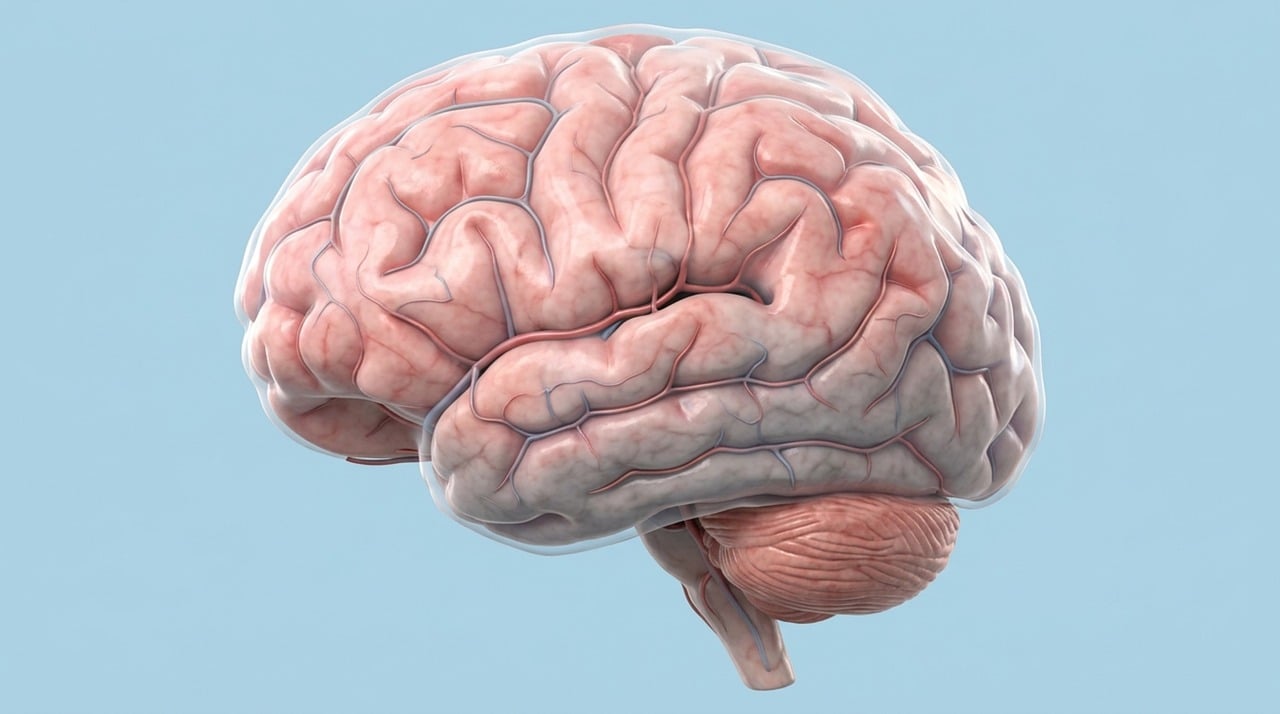
Introduction: Why Does the Brain Create Dreams?
Every night, the human brain enters a remarkable state.
The body becomes largely disconnected from the outside world, muscles become deeply relaxed, sensory information is reduced, and yet the mind can generate entire worlds.
A person can dream about flying through a city, talking to someone who died years ago, being chased through an unfamiliar building or suddenly finding themselves in a completely impossible environment.
The experience can feel completely real while it is happening.
Then the person wakes up.
Sometimes the dream disappears within seconds.
Other times, a dream remains vivid for decades.
Why does this happen?
Scientists have studied dreaming for decades, but there is still no universally accepted explanation for why the sleeping brain produces conscious experiences.
Modern neuroscience has, however, revealed much more about what happens inside the brain while dreams occur.
Research shows that dreaming is strongly associated with rapid eye movement, or REM, sleep, but dreams can also occur during non-REM sleep.
This means that dreaming is not simply synonymous with REM sleep.
Instead, it appears to emerge from complex interactions between several brain systems involved in perception, memory, emotion, motivation and consciousness.
A 2026 review of dream neuroanatomy highlights the interaction of the brainstem, thalamus, limbic system and prefrontal cortex, while emphasizing the importance of REM physiology and emotional and memory-related brain systems.
At the same time, researchers continue to debate what dreams actually accomplish.
Possible explanations include memory processing, emotional regulation, threat simulation, predictive processing, learning, brain development and spontaneous activity generated by the sleeping brain.
The biggest mystery may therefore not be whether dreams are real experiences.
It is why the brain creates them in the first place.
What Exactly Is a Dream?
A dream is a conscious mental experience that occurs during sleep.
Dreams can contain visual images, sounds, movement, emotions, memories, thoughts and sensations.
They can also combine elements that would be impossible in waking life.
A person may suddenly change location without traveling.
A familiar person may appear with a completely different identity.
Time can seem to move differently.
The laws of physics may disappear.
Yet the brain often accepts these events as normal while the dream is occurring.
Dream experiences therefore provide scientists with an unusual opportunity to study consciousness without normal interaction with the outside world.
Do We Dream Every Night?
Scientists generally consider dreaming to be extremely common during sleep.
However, people do not remember every dream.
Dream reports can occur after awakenings from both REM and NREM sleep.
REM dreams tend to be longer, more vivid, emotional and story-like, although vivid dreaming is not restricted exclusively to REM sleep.
This distinction is important because it shows that dreaming and REM sleep are closely connected but are not identical phenomena.
Researchers have known for decades that people can report mental experiences after waking from NREM sleep as well.
Therefore, the brain can generate dream-like experiences across different sleep states.
This remains an important clue in the search for the biological basis of dreaming.
What Happens to the Brain During REM Sleep?
REM stands for rapid eye movement.
During REM sleep, the brain becomes highly active.
Electrical activity becomes more similar in some respects to wakefulness than to deep slow-wave sleep.
The eyes move rapidly beneath the eyelids.
Muscle activity is strongly inhibited.
At the same time, several brain systems involved in emotion and memory can become highly active.
Modern research describes REM dreaming as involving interactions between the brainstem, thalamocortical systems and limbic regions.
The amygdala and hippocampus are particularly relevant to emotional and memory-related aspects of dreaming.
Meanwhile, parts of the prefrontal cortex associated with executive control can show reduced activity compared with waking states.
This may help explain why dreams can feel emotionally powerful while lacking ordinary logical consistency.
Why Do Dreams Feel So Real?
One of the strangest properties of dreaming is realism.
A dream may contain an impossible event, yet the dreamer can experience it as if it were genuinely happening.
This happens because the brain can generate internally produced sensory experiences.
Visual areas can participate in internally generated imagery.
Emotional systems can become strongly engaged.
Memory networks can supply people, locations and experiences.
At the same time, the brain is receiving much less normal sensory information from the external world.
The result can be a self-contained simulation.
The brain creates an experience and then interprets that experience from inside the dream.
The Brain Does Not Simply Turn Off During Sleep
Sleep is not a state in which the brain simply shuts down.
Different networks become more or less active depending on the sleep stage.
The brain continues to regulate breathing, circulation, temperature, memory and many other biological functions.
During certain phases, neural activity becomes highly organized.
Dreaming appears to be one expression of this ongoing brain activity.
This is one reason why the old idea that sleep represents a passive shutdown of the brain is scientifically inadequate.
The Activation-Synthesis Theory
One of the most influential scientific explanations of dreaming is the activation-synthesis model.
The theory emerged from research into REM sleep and proposed that brainstem activity during REM sends signals into the cortex.
The cortex then attempts to organize these internally generated signals into a coherent experience.
Under this model, the brain receives internally generated activation and attempts to construct a narrative from it.
This could explain why dreams can contain bizarre combinations of images, memories and emotions.
Rather than receiving a complete story from somewhere inside the brain, the cortex may be constructing an experience from changing patterns of neural activity.
Modern neuroscience has moved beyond treating activation-synthesis as a complete explanation, but the basic idea remains important in the history of dream science.
Current reviews continue to discuss brainstem-driven mechanisms and their relationship to cortical dream experience.
The Memory Consolidation Theory
Another major idea is that dreaming is related to memory processing.
Sleep is strongly associated with memory consolidation.
During sleep, recently acquired information can be reactivated and integrated with existing knowledge.
Researchers have proposed that some dream experiences may reflect this offline processing.
A person who spends the day learning a new skill, meeting unfamiliar people or experiencing emotionally significant events may later dream about related elements.
However, this does not mean that every dream is simply a replay of a memory.
Dreams often transform memories.
People, locations and events can be combined in unusual ways.
This suggests that the relationship between dreaming and memory may involve reconstruction rather than simple playback.
Research on offline memory processing supports the idea that sleeping brains can reactivate and reorganize information acquired while awake.
Could Dreams Help the Brain Process Memories?
Imagine learning hundreds of new pieces of information during a single day.
The brain cannot treat every experience equally.
Some memories need to remain strong.
Others become less important.
Some need to be integrated with older knowledge.
Sleep provides an opportunity for these processes to occur without constant exposure to new external information.
Dreams may sometimes reflect fragments of this activity.
However, scientists still do not know whether the conscious dream experience itself is necessary for memory consolidation.
This distinction is critical.
Memory processing clearly occurs during sleep.
It does not automatically follow that dreams are the mechanism responsible.
The Emotional Regulation Theory
Another influential hypothesis is that dreaming helps process emotions.
Dreams often contain strong emotional experiences.
Fear, anxiety, sadness, excitement, embarrassment and affection are common features of dream reports.
The brain systems involved in emotion can be active during REM sleep.
This has led researchers to investigate whether dreaming contributes to emotional adaptation.
Perhaps the sleeping brain revisits emotionally significant information in a different physiological environment.
Perhaps repeated exposure to emotional memories in dreams changes how they are represented.
Or perhaps emotional dreams are simply a consequence of the brain systems that happen to be active during REM sleep.
The evidence has not yet established one definitive explanation.
Why Are Dreams Sometimes So Emotional?
The emotional intensity of dreams may partly reflect activity in limbic brain systems.
The amygdala is strongly associated with emotional processing.
The hippocampus is important for memory.
During REM sleep, these systems can interact with other regions involved in generating perception and internal experience.
At the same time, executive control systems may operate differently from wakefulness.
This combination may produce dreams that are emotionally intense but logically unusual.
The Threat Simulation Theory
Some researchers have proposed that dreaming provides a virtual environment for simulating threats.
Humans frequently dream about being chased, attacked, lost, late or placed in dangerous situations.
From an evolutionary perspective, repeatedly simulating threatening situations could theoretically help the brain prepare for future challenges.
This idea is known as threat simulation theory.
However, not all dreams involve threats.
People also dream about ordinary conversations, relationships, travel, work, food, entertainment and completely abstract experiences.
Therefore, threat simulation may explain some dream content without explaining dreaming as a whole.
The Predictive Processing Theory
Another modern approach views the brain as a prediction-generating system.
According to predictive processing theories, the brain constantly generates expectations about what is happening and compares them with incoming information.
During sleep, external sensory information is dramatically reduced.
The brain therefore operates under different conditions.
Some researchers propose that dream experiences emerge from internally generated predictions, memories and emotional signals rather than ordinary sensory input.
Recent theoretical work has connected dreaming with predictive processing and the brain's attempts to generate meaningful internal experiences.
This framework is attractive because it links dreaming with a broader theory of how the brain constructs conscious experience.
Could Dreams Be a Form of Virtual Reality?
Dreaming can be viewed as a naturally generated virtual environment.
The brain creates a world.
It creates characters.
It generates sensations.
It creates emotional responses.
It produces a sense of self moving through that environment.
The external world is largely disconnected while the internal simulation becomes dominant.
Some researchers have therefore compared dreaming to a form of internally generated virtual reality.
This does not mean that dreams are literally computer simulations.
It means that the brain can generate a convincing model of reality without relying entirely on external sensory information.
Why Are Dreams So Strange?
Dreams often violate ordinary logic.
You might be speaking to someone who suddenly transforms into another person.
A building might contain impossible rooms.
You might fly without questioning how it works.
This bizarre quality may result from changes in the balance between brain systems during sleep.
Reduced executive control may make it harder for the dreaming mind to identify contradictions.
Meanwhile, emotional and associative systems can remain active.
The result may be a form of thinking that is more associative and less constrained by ordinary reality.
Why Do We Forget Most Dreams?
Most people remember only a fraction of their dreams.
Sometimes the memory disappears almost immediately after waking.
One explanation is that the brain conditions supporting dream experience are not ideal for forming stable long-term memories of the dream itself.
Dreams can also be interrupted by the transition from sleep to wakefulness.
New sensory information rapidly arrives.
Attention shifts toward the external world.
The fragile memory of the dream can disappear.
This is why a person may remember a dream clearly for several seconds and then suddenly realize that most of it is gone.
Why Do Some People Remember Dreams Better?
Dream recall varies substantially between individuals.
Some people remember multiple dreams almost every morning.
Others rarely remember any.
Waking briefly during or immediately after a dream can increase the probability of remembering it.
Attention also matters.
People who deliberately focus on remembering dreams may become better at recalling them.
Sleep characteristics, personality and individual differences in brain activity may also contribute.
Do Dreams Only Happen During REM Sleep?
No.
This is one of the most important discoveries in modern dream research.
Dreaming is strongly associated with REM sleep, but people can report dreams after awakening from NREM sleep as well.
NREM dreams may sometimes be less vivid or less bizarre than REM dreams, although vivid and complex NREM dream experiences can occur.
This means that researchers cannot explain all dreams using REM physiology alone.
The distinction has pushed scientists toward broader models of consciousness and sleep.
What Is Happening in the Brain During NREM Dreams?
NREM sleep includes several stages with distinct patterns of neural activity.
During deeper sleep, slow oscillations and coordinated neural activity become prominent.
Yet subjective experiences can still occur.
Some NREM dreams may resemble thoughts or fragmented experiences, while others can become surprisingly vivid.
This suggests that conscious experience can arise under multiple sleep conditions.
The Role of the Brainstem
The brainstem plays a major role in regulating REM sleep.
Brainstem circuits interact with thalamic and cortical systems.
Neural signals associated with REM can influence visual and other sensory-related areas of the brain.
Ponto-geniculo-occipital, or PGO, waves are one example of neural activity associated with REM sleep and have been studied as a potential mechanism contributing to dream imagery.
Research continues to investigate exactly how these signals become part of conscious dream experiences.
The Role of the Thalamus
The thalamus acts as an important communication hub within the brain.
It participates in communication between subcortical structures and the cerebral cortex.
During sleep, thalamocortical interactions change substantially.
These changes help regulate sensory processing and consciousness.
Because dreaming involves internally generated perceptions, researchers are particularly interested in how thalamocortical networks contribute to dream experience.
The Role of the Hippocampus
The hippocampus is essential for many aspects of memory.
It is therefore an important region in research examining dreams and memory.
During sleep, memories can be reactivated and integrated with existing knowledge.
Fragments of these processes may appear in dreams.
A dream might combine a recent conversation with a childhood location and a person encountered years earlier.
Such combinations illustrate how the sleeping brain can reorganize information rather than simply replaying it.
The Role of the Amygdala
The amygdala is strongly involved in emotional processing.
Its activity during REM sleep has been linked to the emotional intensity of dreams.
This may help explain why dreams can produce strong fear, excitement or sadness even though the person is physically safe in bed.
The emotional brain can respond to an internally generated situation as though it were significant.
The Prefrontal Cortex and Dream Logic
The prefrontal cortex is involved in executive functions such as planning, reasoning and evaluating information.
During REM sleep, some prefrontal regions can show reduced activity relative to waking.
This may contribute to the strange logic of dreams.
A person can experience an impossible event without questioning it.
Only after waking does the contradiction become obvious.
The difference illustrates how conscious experience depends not only on which brain regions are active but also on how those regions interact.
Could Dreams Help Us Understand Consciousness?
Dreaming provides a unique natural experiment for consciousness research.
The brain is physically inside the same person.
Yet the person's experience can change dramatically.
During waking, consciousness is heavily influenced by external sensory information.
During dreaming, the brain can generate a complete subjective world with greatly reduced external input.
This makes dreaming particularly valuable for scientists studying the relationship between neural activity and conscious experience.
Lucid Dreaming Offers an Even Stranger Case
Lucid dreaming occurs when a person becomes aware that they are dreaming while the dream continues.
Some lucid dreamers can deliberately change aspects of the dream.
This phenomenon is particularly interesting to neuroscientists because it combines features of dreaming with a degree of metacognitive awareness.
Researchers have used lucid dreaming to investigate consciousness, self-awareness and communication during sleep.
Can You Control Your Dreams?
Some people can influence dream content, particularly during lucid dreams.
However, ordinary dreams are not usually under deliberate conscious control.
Techniques intended to increase lucid dreaming include maintaining dream journals, reality-testing practices and certain sleep-related strategies.
The effectiveness of these approaches varies between individuals.
Dream control should not be confused with ordinary dream generation.
Why Do We Dream About People We Know?
Dreams frequently include familiar people.
This may reflect the brain's use of autobiographical memory and emotionally significant information.
People who matter to us are represented by extensive networks of memories, emotions and associations.
These networks can therefore become incorporated into dream experiences.
It does not necessarily mean that the dream contains a hidden message about that individual.
Often, the person may simply represent a collection of memories and emotional associations activated during sleep.
Why Do We Have Recurring Dreams?
Recurring dreams can involve similar settings, situations or emotional themes.
Scientists have proposed several explanations.
Repeated emotional concerns may repeatedly activate similar memory networks.
Stable patterns of thinking may influence dream content.
Sleep disturbances and stress may also affect recurring dreams.
However, recurring dreams should not automatically be interpreted using universal dream dictionaries.
The same dream symbol can mean different things to different people.
Are Dreams Messages From the Subconscious?
The word subconscious is frequently used when discussing dreams, but its scientific meaning is often unclear.
Dreams certainly involve mental processes that occur without conscious control.
Memory fragments, emotions and associations can become active during sleep.
However, science has not established that dreams contain universal symbolic messages.
Dream interpretation remains substantially different from neuroscience.
Modern researchers generally focus on measurable brain activity, cognitive processes and behavioral effects rather than assuming that every dream contains a hidden meaning.
What About Freud's Dream Theory?
Sigmund Freud proposed that dreams provide access to unconscious wishes and conflicts.
His ideas had an enormous influence on psychology and popular culture.
However, modern neuroscience does not treat classical Freudian dream interpretation as an established biological explanation for dreaming.
Contemporary research focuses more heavily on neural activity, memory, emotion, predictive processing and consciousness.
Some modern theoretical work has nevertheless explored connections between psychoanalytic concepts and contemporary models of predictive processing.
These remain theoretical frameworks rather than settled explanations.
The Modern View: There May Not Be One Dream Function
One important possibility is that scientists are asking the wrong question.
Instead of asking what single purpose dreams serve, researchers may eventually conclude that dreaming results from several interacting processes.
Memory processing could contribute.
Emotional regulation could contribute.
Brain development and plasticity could contribute.
Predictive processing could contribute.
Spontaneous neural activity could contribute.
Different types of dreams may arise from different combinations of these mechanisms.
What Scientists Still Do Not Know
Despite decades of research, several major questions remain unresolved.
Scientists still do not know exactly why subjective dream experience exists.
They do not know whether dreaming itself provides an essential biological function.
They do not know why some dreams are remembered while others disappear immediately.
They do not fully understand why dream content can be so bizarre.
And they do not yet have a single theory capable of explaining every type of dream.
New 2026 Research Is Adding More Detail
Recent research is increasingly focused on the precise neural architecture of dreaming rather than treating dreams simply as psychological stories.
A 2026 review of dream neuroanatomy integrates evidence from neuroimaging, electrophysiology and neurochemical research and describes interactions among brainstem, thalamic, limbic and prefrontal systems.
The review also highlights the importance of acetylcholine and other neuromodulatory systems in REM sleep and discusses the relationships among dreaming, emotion, memory and clinical sleep disorders.
This represents an important shift in emphasis.
Scientists are increasingly trying to understand dreaming as a measurable brain state.
Why Dream Research Is So Difficult
Dreams are private experiences.
Researchers cannot directly observe a person's subjective dream while it is happening.
Instead, they usually have to wake participants and ask them to describe what they experienced.
That creates an immediate scientific problem.
The dream may already be fading.
Memory can distort the report.
Participants may remember only selected fragments.
Different people may also use language differently to describe similar experiences.
This makes dream research considerably more difficult than measuring a simple physical process.
Brain Imaging Is Changing Dream Research
Modern neuroimaging allows scientists to examine brain activity associated with dreaming.
Researchers can compare patterns of activation across sleep stages.
They can also examine relationships between particular brain networks and dream characteristics.
This does not mean that scientists can simply read an entire dream from a brain scan.
Dream decoding remains an extremely difficult problem.
However, imaging provides increasingly detailed information about the neural conditions associated with conscious dream experiences.
Could Scientists Eventually Decode Dreams?
Scientists have already demonstrated that aspects of visual and mental content can sometimes be inferred from brain activity under controlled experimental conditions.
However, decoding a complete dream in real time would be dramatically more difficult.
Dreams contain complex narratives, emotions, memories, sensory experiences and abstract thoughts.
The neural representation of these experiences is distributed across many brain systems.
Future advances in artificial intelligence and brain imaging may improve researchers' ability to infer aspects of dream content.
But complete dream recording remains far beyond current technology.
Could AI Change the Study of Dreams?
Artificial intelligence may become an important tool for dream research.
Machine-learning systems can analyze large datasets of sleep recordings, brain activity and dream reports.
AI could help identify patterns that are difficult for humans to detect manually.
Researchers may eventually combine sleep recordings with detailed dream reports to build better models of how brain activity relates to subjective experience.
This could create new opportunities for studying consciousness.
What Dreams Tell Us About the Human Brain
Perhaps the most important lesson from dream research is that consciousness does not require a normal external environment.
The sleeping brain can generate a world internally.
It can produce perceptions without external objects.
It can generate emotions without immediate external threats.
It can activate memories without deliberate recall.
It can create a sense of self inside an imagined environment.
Dreaming therefore demonstrates how powerful the brain's internal world really is.
Why Dream Science Matters Beyond Sleep
Understanding dreams could help scientists understand consciousness itself.
It could also improve knowledge of memory, emotional processing and sleep disorders.
Abnormal dreaming can occur in several neurological and psychiatric conditions.
Nightmares can become clinically significant.
REM sleep behavior disorder can involve unusual motor activity during REM sleep.
Trauma can strongly influence dream content.
Better understanding of normal dreaming could therefore contribute to understanding abnormal sleep experiences.
The Biggest Dream Theories Compared
Several major scientific ideas currently coexist.
The activation-synthesis approach emphasizes internally generated neural activation during REM sleep.
Memory-based theories emphasize reactivation and processing of recent experiences.
Emotional theories emphasize the regulation or processing of emotionally significant information.
Threat simulation theories propose that some dreams function as simulations of danger.
Predictive-processing approaches emphasize the brain's internally generated models and predictions.
Consciousness theories investigate dreaming as a naturally occurring altered state of conscious experience.
None of these explanations has been universally accepted as the complete answer.
So, Why Do We Dream?
The most scientifically honest answer is that we still do not know exactly.
Scientists know considerably more about how dreaming occurs than they did several decades ago.
We know that dreaming can occur during both REM and NREM sleep.
We know that REM dreaming is associated with complex activity involving brainstem, thalamic, limbic and cortical systems.
We know that memory and emotional systems are deeply involved in sleep.
We know that dream experiences can emerge without normal sensory input.
But whether dreaming itself has one essential biological function remains unresolved.
Conclusion: Dreams May Be the Brain's Most Mysterious Simulation
Every night, the human brain creates experiences that can feel as real as waking life.
It generates people, places, emotions, memories and stories while the body remains asleep.
Modern neuroscience has begun to reveal the machinery behind this phenomenon.
Brainstem circuits help regulate REM sleep.
Thalamocortical networks participate in communication between major brain systems.
The hippocampus contributes to memory processes.
The amygdala and related limbic structures contribute to emotional experience.
Changes in prefrontal activity may help explain why dream logic differs from waking reasoning.
Yet the fundamental mystery remains.
Why does all of this neural activity become a conscious experience?
Perhaps dreams are partly a consequence of memory processing.
Perhaps they help regulate emotion.
Perhaps they simulate possible situations.
Perhaps they emerge naturally from the brain's predictive machinery.
Or perhaps dreaming serves several functions that vary across sleep stages and individuals.
The most exciting possibility is that studying dreams may eventually reveal something much bigger than the purpose of sleep.
It may help scientists understand how the brain creates consciousness itself.
For now, every night offers a remarkable experiment.
When the lights go out and the external world becomes quiet, the brain does not simply stop working.
It begins generating an internal world.
And scientists are only beginning to understand why.