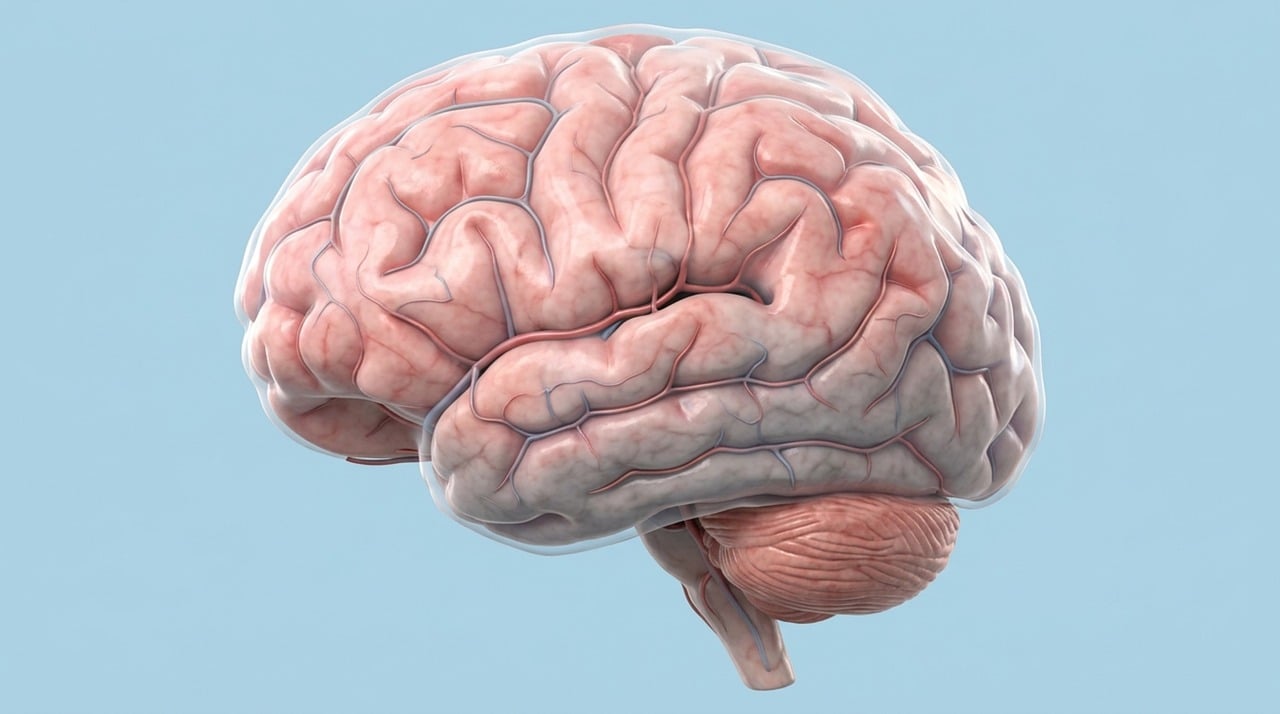
Introduction: Why Does Life Seem to Speed Up?
Have you ever wondered why childhood seemed to last forever while adulthood can feel as though entire years disappear in an instant?
A summer vacation during childhood could feel enormous.
A school year could seem almost endless.
Yet as adults, birthdays, holidays and even entire years can seem to arrive almost immediately after the previous ones.
The strange part is that the physical passage of time has not changed.
A second is still a second.
A day still contains the same number of hours.
The Earth's rotation has not accelerated simply because we grew older.
What changes is our experience of time.
Psychologists call this subjective time perception.
Research has found that people often report that longer periods of their lives, particularly the past several years or decade, seem to have passed more quickly as they get older.
However, the science is more complicated than the popular explanation that "time flies because we have fewer memories."
Research published in 2026 provides a particularly interesting clue: differences in how quickly people perceive the past decade may be associated with differences in their ability to form new memories.
This suggests that the feeling that life is accelerating may be connected to the way the aging brain records and reconstructs experiences.
Does Time Actually Move Faster When We Get Older?
No.
There is no evidence that physical time accelerates with age.
What changes is the subjective interpretation of elapsed time.
This distinction is essential.
When someone says, "The last ten years went by incredibly fast," they are describing a psychological experience rather than a physical change in the rate at which time passes.
Studies of time perception suggest that age-related differences are not equally strong across every time scale.
People do not necessarily experience every individual minute as dramatically faster simply because they are older.
The strongest and most consistent effect tends to appear when people look backward over longer periods.
One influential study involving 499 participants aged 14 to 94 found that older adults generally reported faster passage of longer periods, although the effects were relatively modest and accounted for only a limited amount of the variation between people.
This means age matters, but it is not the only explanation.
The Difference Between Clock Time and Psychological Time
There are at least two different concepts of time involved in everyday experience.
The first is objective time.
This is measured by clocks and physical processes.
The second is subjective time.
This is the feeling of how quickly or slowly time appears to pass.
These two forms of time can behave very differently.
Five minutes waiting for an important phone call can feel extremely long.
Five minutes talking to a close friend can disappear almost instantly.
The clock measures the same duration in both situations.
The brain does not experience them in the same way.
Why Childhood Often Feels So Long
One major explanation involves novelty.
Childhood contains an enormous number of first experiences.
The first day of school.
The first time riding a bicycle.
The first trip to another city.
The first major friendship.
The first experience of independence.
The first time seeing unfamiliar environments and learning complex skills.
The developing brain is constantly encountering information that requires attention and learning.
As a result, childhood can contain a very dense collection of distinctive experiences.
When people later remember these periods, they may appear much longer than periods dominated by repetitive routines.
The Novelty Theory of Time Perception
One influential explanation proposes that the number of novel experiences encoded into memory affects our retrospective perception of time.
Imagine two years.
During the first year, you visit unfamiliar places, learn new skills, meet new people and experience major changes.
During the second year, your routine remains almost identical every day.
When you look back later, the first year may appear much longer because it contains many distinctive memories.
The second year may feel compressed because many days resemble one another.
This is one reason novelty is often discussed as an important factor in subjective time.
The Holiday Paradox
Travel provides a fascinating example.
During an exciting vacation, time may seem to pass quickly.
You become absorbed in the experience.
But when you return home and think about the trip, it may seem surprisingly long.
Why?
The trip may have contained many new locations, conversations, sights and experiences.
Your brain has stored many distinctive events.
In retrospect, the large number of memory markers can make the period appear more substantial.
This creates an apparent contradiction:
Novel experiences can make time feel faster while they are happening, but they can make the same period seem longer when remembered later.
Prospective and Retrospective Time Perception
Psychologists distinguish between prospective and retrospective judgments of time.
Prospective timing occurs when you know you will need to monitor time while an event is happening.
Retrospective timing occurs when you look backward and estimate how long something lasted.
These processes are not identical.
When you are waiting for something, attention may be focused strongly on the passage of time.
When you are deeply engaged in an activity, attention may move away from the clock.
Later, memory becomes much more important in determining how long the period seems to have been.
Why Routine Can Make Years Feel Shorter
Adult life often becomes more predictable.
Work schedules repeat.
Commutes repeat.
Meals repeat.
Household responsibilities repeat.
Weekdays can begin to resemble one another.
When similar experiences are compressed into memory, many individual days become difficult to distinguish.
This can produce the subjective impression that months or years disappeared quickly.
The calendar contains hundreds of separate days.
Memory may not represent each one as an equally distinctive event.
The Brain Does Not Store Every Day Like a Video Recording
Human memory is selective.
The brain does not preserve an exact recording of every moment of life.
Instead, memories are reconstructed from information that was encoded, stored and later retrieved.
Attention influences what gets encoded.
Emotion influences what becomes memorable.
Novelty influences what stands out.
Meaning influences what we later retrieve.
This means our memories can influence how we perceive the length and structure of our lives.
The 2026 Research Adds an Important Clue
A 2026 study published in Memory & Cognition examined the relationship between age, memory and subjective time passage.
The researchers studied 120 people between the ages of 20 and 91.
The participants were asked about how quickly the previous decade and year seemed to have passed, while researchers also assessed autobiographical memories and aspects of cognitive functioning.
The study confirmed an age-related pattern specifically for perceptions of the past decade.
However, it did not find that simply having fewer autobiographical memories explained the effect.
Instead, reduced cognitive functioning, particularly reduced ability to form new memories as measured through delayed memory recall, was associated with stronger perceptions of time compression among older participants.
This is important because it challenges an overly simple version of the "fewer memories" theory.
The issue may be less about the total number of memories people possess and more about how effectively new experiences are encoded.
Memory Encoding May Be More Important Than Memory Quantity
Consider two people who both experience a year containing hundreds of events.
If one person forms strong, distinctive memories from many of those events while the other forms fewer new memory traces, their later experience of that year may differ.
The second person may perceive the period as more compressed.
This is one reason researchers are increasingly interested in memory formation rather than simply counting autobiographical memories.
The distinction is subtle but important.
It suggests that subjective time may depend partly on how richly the brain records new experiences.
Why Memory Formation Changes With Aging
Normal aging can affect several aspects of cognitive processing.
Processing speed can change.
Attention can change.
Working memory can change.
Some forms of episodic memory can also become less efficient.
These changes do not mean that older adults stop forming meaningful memories.
In fact, older people can have rich and vivid memories of important life events.
The issue is that certain forms of learning and encoding new information may become less efficient.
If fewer new experiences are strongly encoded as distinctive events, longer periods may later feel compressed.
Attention Plays a Major Role
Time perception is strongly influenced by attention.
When attention is focused on the passing of time, intervals can feel longer.
When attention is absorbed elsewhere, time can seem to disappear.
This is why an engaging activity can make an afternoon feel short.
It is also why waiting for an appointment can make a few minutes feel enormous.
The brain does not have to treat time as the primary object of attention.
Instead, time perception interacts with what we are doing and where our mental resources are directed.
Why Being Busy Can Make Time Feel Faster
Modern adult life often involves constant activity.
Work, family responsibilities, commuting, digital communication and household tasks can consume attention throughout the day.
When attention is continuously occupied, there may be little opportunity to monitor the passage of time.
The day can therefore feel as though it disappeared.
Repeated busy days can produce an especially strong retrospective effect.
Looking backward, there may be few distinctive markers separating one week from another.
Time Pressure Could Also Matter
Researchers have proposed that time pressure contributes to the feeling that life is moving quickly.
When people feel that they have too much to do and not enough time, the subjective experience of time can become compressed.
This does not necessarily depend on age.
Young adults can experience intense time pressure too.
This helps explain why age alone cannot account for every person's experience of time.
Does Age Really Make Every Day Feel Faster?
Not necessarily.
This is one of the most important qualifications in the research.
Studies have found relatively small age differences in people's judgments of shorter periods.
In a large study of more than 1,800 adults, age differences in the perceived speed of time were generally small except when people were asked about the previous decade.
This suggests that the phenomenon is particularly strong in retrospective judgments of long periods rather than a dramatic acceleration of every moment of everyday life.
Why Ten Years Can Feel Like They Disappeared
Long periods are reconstructed differently from individual moments.
When someone asks, "How long did the last ten years feel?" the brain cannot retrieve every day individually.
Instead, it relies on significant events, memories and general impressions.
If many years contain similar routines, they can become compressed into a relatively small number of memory landmarks.
The decade can therefore appear to have passed extraordinarily quickly.
Why Childhood Is Overrepresented in Memory
Childhood and adolescence contain many major developmental transitions.
People learn languages, social rules, physical skills and abstract concepts.
They enter new schools.
They form new relationships.
They experience increasing independence.
Each transition creates distinctive memory landmarks.
When adults remember childhood, those landmarks can make the period feel unusually extensive.
The Proportional Theory of Time
Another famous idea suggests that each year represents a smaller fraction of a person's accumulated life.
For a five-year-old, one year represents a large fraction of everything they have experienced.
For a fifty-year-old, one year represents a much smaller fraction of their life.
This intuitive mathematical explanation has been proposed in different forms for decades.
However, it should not be treated as a complete scientific explanation.
Researchers have found evidence that other psychological mechanisms, including memory and time pressure, also matter.
Why the Proportional Theory Is Not Enough
If proportional age alone determined time perception, people of the same age should experience time in very similar ways.
They do not.
Two 50-year-olds can have dramatically different perceptions of the speed of life.
One may live a highly repetitive routine.
Another may constantly travel, learn, change careers and develop new relationships.
Their subjective timelines may therefore differ considerably.
Novelty Can Change the Experience of Time
Novelty appears to be one of the most useful concepts for understanding subjective time.
When an experience is new, the brain must process unfamiliar information.
This can increase attention and create stronger memory representations.
When experiences become predictable, less information may be needed to distinguish one event from another.
This can contribute to retrospective compression.
Could Learning New Things Make Life Feel Longer?
Possibly, at least from a retrospective perspective.
Learning a new language, visiting unfamiliar places, starting a new hobby or meeting new people can create distinctive memory landmarks.
These experiences may make later periods easier to distinguish in memory.
However, this does not mean that novelty literally slows physical time.
Instead, it can alter how richly a period is represented in memory.
Why Exciting Experiences Can Feel Short While They Are Happening
There is an interesting paradox.
During an exciting activity, attention may become deeply absorbed.
You may stop checking the clock.
As a result, the experience can feel short in the moment.
Later, however, the same experience may seem long because it contains many distinctive memories.
This difference between experiencing time and remembering time is central to understanding subjective time perception.
The Role of Emotion
Emotion also changes our experience of time.
Fear, boredom, excitement, anticipation and happiness can produce different temporal experiences.
Highly emotional events can become strong memory landmarks.
But emotional state can also influence how quickly people judge everyday activities to have passed.
This means there is no single "brain clock" that determines subjective time under every condition.
Does the Brain Have an Internal Clock?
The brain does contain neural systems involved in timing.
Different brain networks participate in estimating intervals, sequencing events and coordinating movement.
However, subjective time perception is not controlled by one simple clock mechanism.
Timing depends on attention, arousal, memory, sensory information, expectations and context.
Different timing tasks can therefore rely on different neural processes.
Time Perception and the Aging Brain
Aging affects the brain in complex ways.
Some cognitive abilities remain remarkably stable.
Others change gradually.
Processing speed, attention and certain aspects of episodic memory can be affected.
Because these functions contribute to how experiences are encoded and reconstructed, normal cognitive aging may influence subjective time.
Importantly, this does not mean that feeling that time passes quickly is evidence of disease.
It is a common human experience.
Normal Aging Is Not the Same as Dementia
Everyone experiences some cognitive changes with age.
Occasional difficulty remembering names, slower recall or needing more time to learn unfamiliar information can occur during normal aging.
Serious memory impairment is different.
Persistent confusion, major problems with daily functioning or rapidly worsening memory should be evaluated medically.
The ordinary sensation that years seem to pass quickly should not by itself be interpreted as a neurological disorder.
Why Digital Life May Make Time Feel Even Faster
Modern technology creates another interesting possibility.
Smartphones and social media provide continuous streams of information.
Short videos, notifications and rapid switching between activities can fragment attention.
People may spend hours moving between small digital experiences without creating many strong autobiographical landmarks.
This could contribute to the feeling that an entire evening disappeared.
However, research on the long-term effects of modern digital habits on age-related time perception is still developing.
Routine and Digital Distraction Can Reinforce Each Other
A repetitive day combined with fragmented digital attention may create a particularly strange temporal experience.
The day contains many activities, but few may become deeply encoded as distinctive memories.
Later, the period can feel surprisingly empty or compressed.
This is one reason deliberate attention and novelty may be useful if someone wants to create a richer sense of lived experience.
Why New Experiences Create Memory Landmarks
A memorable event gives the brain a reference point.
A first international trip is easy to remember.
A major career change is easy to remember.
A wedding, graduation or birth of a child can become a powerful temporal landmark.
These landmarks help organize autobiographical memory.
Periods containing many landmarks can appear more extended when remembered.
Can We Make Life Feel Slower?
We cannot slow physical time.
But we may be able to influence how richly we experience and remember it.
One strategy is to introduce meaningful novelty.
Learning new skills, visiting unfamiliar places, changing routines and engaging in challenging activities can create additional memory landmarks.
Another strategy is to pay attention to experiences rather than constantly switching between tasks.
Mindfulness and Time Perception
Mindfulness encourages attention to present experience.
Instead of operating automatically, a person deliberately notices sensations, thoughts and surroundings.
This can increase awareness of the present moment.
Whether mindfulness can substantially alter long-term age-related time compression remains an area for further research, but attention clearly plays a major role in subjective timing.
Why Being Present Can Matter
Many everyday experiences happen automatically.
You drive a familiar route.
You make the same breakfast.
You perform the same work routine.
Later, you may have difficulty remembering individual details.
Deliberate attention can make experiences more distinctive.
Instead of simply passing through a routine, you notice what is happening.
Does Traveling Make Time Feel Longer?
Travel is a useful example of the relationship between novelty and memory.
Unfamiliar environments require continuous processing.
You notice new streets, languages, foods, buildings and social interactions.
This can produce a dense collection of distinctive memories.
Consequently, a trip that seemed short while it was happening may seem surprisingly long when remembered afterward.
Why First Experiences Matter So Much
First experiences tend to receive more attention because the brain cannot rely on an established prediction.
The first day at a new job is different from the hundredth ordinary day.
The first day contains uncertainty.
The hundredth may be highly predictable.
This difference can influence how distinctive the memories become.
The Prediction Machine in the Brain
The brain is not simply a passive recorder of information.
It continuously predicts what is likely to happen next.
When an environment becomes familiar, fewer resources may be needed to process predictable information.
Novel situations create prediction errors that require additional processing.
These differences in processing can influence attention and memory.
This provides another possible link between novelty and subjective time.
Why Repetition Can Compress Experience
Imagine taking the same route to work for 300 days.
Most of those journeys may become difficult to distinguish individually.
Now imagine taking 30 completely different journeys.
Each may have its own distinctive features.
When looking backward, the second set can appear more extensive even if the total clock time is identical.
Why Time Can Feel Slow During Boredom
Boredom provides the opposite effect.
When there is little stimulation, attention can turn toward the passage of time itself.
Every minute becomes noticeable.
The period can therefore feel unusually long while it is happening.
However, when remembered later, a boring period may contain few distinctive memories and can become compressed.
Again, present-time perception and retrospective memory can produce opposite impressions.
Why Waiting Feels Different From Remembering
Suppose you wait 30 minutes for a delayed train.
During the wait, you may repeatedly check the clock.
The interval feels long.
Six months later, however, that particular 30-minute wait may occupy almost no space in your memory.
This demonstrates why the subjective experience of time cannot be explained by a single mechanism.
What the New Research Changes
The 2026 research is especially interesting because it challenges the assumption that older people simply have fewer autobiographical memories.
In the study, older participants actually reported more vivid and meaningful recollections in some respects.
Yet reduced performance on a measure related to forming new memories was associated with stronger perceptions that the previous decade had passed quickly.
This suggests that the critical factor may be the ongoing encoding of new experiences rather than the total amount of autobiographical information stored across a lifetime.
Could Memory Decline Be a Key Mechanism?
It would be too early to say that memory decline completely explains age-related time compression.
The evidence points to an association rather than a single proven cause.
Time perception is influenced by multiple interacting factors.
Memory formation may be one important component among attention, routine, emotional state, time pressure and expectations.
Future research will need to determine how these mechanisms interact.
Why Everyone Experiences Time Differently
Two people of exactly the same age can have completely different experiences of time.
One may work in a highly repetitive environment.
Another may constantly learn and travel.
One may experience chronic time pressure.
Another may have a relaxed schedule.
One may be highly attentive to daily events.
Another may spend much of the day absorbed in routine.
These differences can produce different subjective timelines.
Personality May Also Matter
Personality and emotional characteristics can influence how people evaluate their experiences.
People who actively seek novelty may encounter more distinctive events.
People who prefer stable routines may experience more repetition.
Neither lifestyle is inherently better.
But they may produce different memory structures and therefore different experiences of how quickly life appears to pass.
Why Major Life Changes Can Make Time Feel Different
Major transitions create temporal landmarks.
Moving to another country, changing careers, starting university or becoming a parent can divide life into clearly identifiable periods.
These boundaries make autobiographical time easier to organize.
During periods of major change, individual days may also feel more distinctive.
After returning to routine, time may once again become compressed.
Can We Use This Knowledge to Live More Intentionally?
The science suggests a practical lesson.
If you want your years to feel richer in retrospect, simply filling them with more activity may not be enough.
The important factor may be meaningful, distinctive experience.
Learning, exploration, relationships and attention can create stronger memory landmarks.
The goal is not to make life feel artificially slow.
It is to make experiences more deeply lived and remembered.
Novelty Does Not Have to Mean Extreme Experiences
Creating new memories does not require expensive travel or dramatic life changes.
You can learn a musical instrument.
Try a new sport.
Read books outside your normal interests.
Visit unfamiliar places in your own region.
Learn to cook a new cuisine.
Take a different route.
Have conversations with people you normally would not meet.
Small changes can create new experiences without completely disrupting daily life.
The Importance of Meaning
Novelty alone is not necessarily enough.
Meaningful experiences are often more likely to become important autobiographical memories.
A new experience connected to relationships, personal goals or learning may become a stronger landmark than random novelty.
This suggests that the richest experience of time may come from combining attention, novelty and meaning.
Why Time Seems to Accelerate During Adulthood
There is therefore no single answer.
Several mechanisms probably interact.
Adults often experience more routine.
Novel experiences may become less frequent.
Attention is frequently divided.
Time pressure can increase.
Memory encoding can change with aging.
Long periods are reconstructed from memory rather than replayed like recordings.
Together, these factors can create the powerful impression that time accelerates.
Is the Effect Inevitable?
No.
People vary enormously in their experience of time.
Age is associated with certain patterns, particularly when people evaluate long retrospective periods, but it does not determine subjective time completely.
A person can continue learning, exploring and creating meaningful memories throughout adulthood and older age.
There is no biological switch that suddenly makes every year feel short on a particular birthday.
What Scientists Still Do Not Know
Researchers still do not have a complete theory of subjective time.
It remains difficult to separate the effects of memory, attention, emotional state, novelty, cognitive aging and cultural expectations.
Different experiments measure different aspects of time perception.
A person estimating a five-second interval in a laboratory is not experiencing the same phenomenon as someone remembering the previous decade.
Future research will need to connect these different levels of time perception.
The Bigger Mystery of Human Time
Perhaps the most fascinating part of this research is that humans do not experience life as a continuous stream of identical seconds.
We experience events.
We organize memories.
We create narratives.
We divide our lives into childhood, adolescence, adulthood, careers, relationships and major transitions.
Subjective time emerges from this complex interaction between the brain and experience.
Conclusion: The Clock Does Not Change—Our Experience Does
Time does not actually accelerate as we grow older.
The clock continues at exactly the same rate.
What changes is how the brain experiences and remembers the passage of life.
Research suggests that the sensation that time speeds up with age is particularly strong when people look backward over long periods such as the previous decade.
Routine, reduced novelty, attention, time pressure, emotional state and memory all appear to contribute.
The newest evidence adds an important refinement: a 2026 study found that stronger perceptions of time compression in older adults were associated with reduced ability to form new memories, rather than simply having fewer autobiographical memories.
This means the old explanation that "life feels faster because you have fewer new experiences" may contain part of the truth, but it is not the entire story.
The deeper explanation may involve how effectively the brain continues to encode new experiences as we age.
And that leads to a surprisingly hopeful conclusion.
Although we cannot slow the physical passage of time, we can influence how attentively and meaningfully we experience it.
Learning something new, exploring unfamiliar environments, building relationships and paying attention to everyday experiences can create richer memory landmarks.
Years will still contain the same number of days.
But the way those days are experienced and remembered may determine how large they feel when we look back.