Introduction: That Strange Feeling You Have Been Here Before
You walk into a room you have never visited.
You meet people you are certain you have never seen.
Nothing about the situation should be familiar.
And yet, for a few seconds, something feels strangely wrong.
You suddenly have the powerful impression that this exact moment has happened before.
You may even feel as though you know what someone is about to say or what will happen next.
Then the sensation disappears.
This is déjà vu.
The phrase comes from French and literally means "already seen."
Déjà vu is one of the most fascinating experiences studied by cognitive scientists and neuroscientists because it reveals something unusual about human memory.
The brain can create a powerful feeling of familiarity without producing a genuine memory of the event.
That distinction is at the center of modern scientific explanations of déjà vu.
Researchers do not currently have one universally accepted explanation for every instance of déjà vu. However, studies increasingly connect the phenomenon with the brain systems responsible for recognition, familiarity, memory monitoring and the medial temporal lobe.
Some forms of déjà vu are also strongly associated with temporal-lobe epilepsy, providing researchers with an unusual window into the neural mechanisms that can generate the experience.
What Exactly Is Déjà Vu?
Déjà vu is generally described as an intense but brief feeling that a current situation has been experienced previously even though the person knows, or later realizes, that it is actually new.
The important feature is the contradiction.
One part of the mind says:
"This feels familiar."
Another part says:
"But I know I have never experienced this before."
That conflict is important because ordinary recognition usually involves some reason for familiarity.
You recognize a friend because you remember the person's face.
You recognize your house because you have lived there.
You recognize a song because you have heard it previously.
Déjà vu is different.
The feeling of recognition appears without a corresponding conscious memory that explains it.
Researchers have therefore described déjà vu as a form of inappropriate or erroneous familiarity.
Importantly, this does not mean that every déjà vu experience is caused by the same precise neural event.
Current research suggests that several cognitive mechanisms may contribute to the phenomenon.
Why Does Déjà Vu Feel So Real?
The brain does not store memories as perfect recordings.
Instead, memory involves multiple interacting processes.
These include encoding information, storing representations, recognizing previously encountered information, retrieving contextual details and monitoring whether a memory is accurate.
Recognition itself can also involve different experiences.
One is recollection.
Recollection involves remembering specific details about a previous experience.
Another is familiarity.
Familiarity is the feeling that something has been encountered before even when you cannot necessarily identify when or where.
Neuroscience research has shown that these aspects of recognition are related but not identical.
The hippocampus and surrounding medial temporal structures play important roles in memory, while nearby regions contribute to familiarity-based recognition.
This distinction provides an important framework for understanding déjà vu.
The brain may generate a familiarity signal without retrieving an actual memory that explains why the current situation should feel familiar.
The Familiarity Signal
Imagine seeing a face in a crowd.
You immediately feel that you recognize the person.
But you cannot remember where you know them from.
This is a normal example of familiarity without complete recollection.
Eventually, you might realize that the person is someone you worked with several years ago.
In déjà vu, something similar may happen without the memory being successfully identified.
A current scene produces a familiarity response even though conscious memory indicates that the situation is new.
The result is the strange sensation of having experienced the present before.
Several scientific models of déjà vu are built around this idea of a mismatch between familiarity and actual recollection.
The Brain Regions Linked to Déjà Vu
Déjà vu is not believed to come from a single isolated "déjà vu center" in the brain.
Instead, researchers study networks involved in memory and recognition.
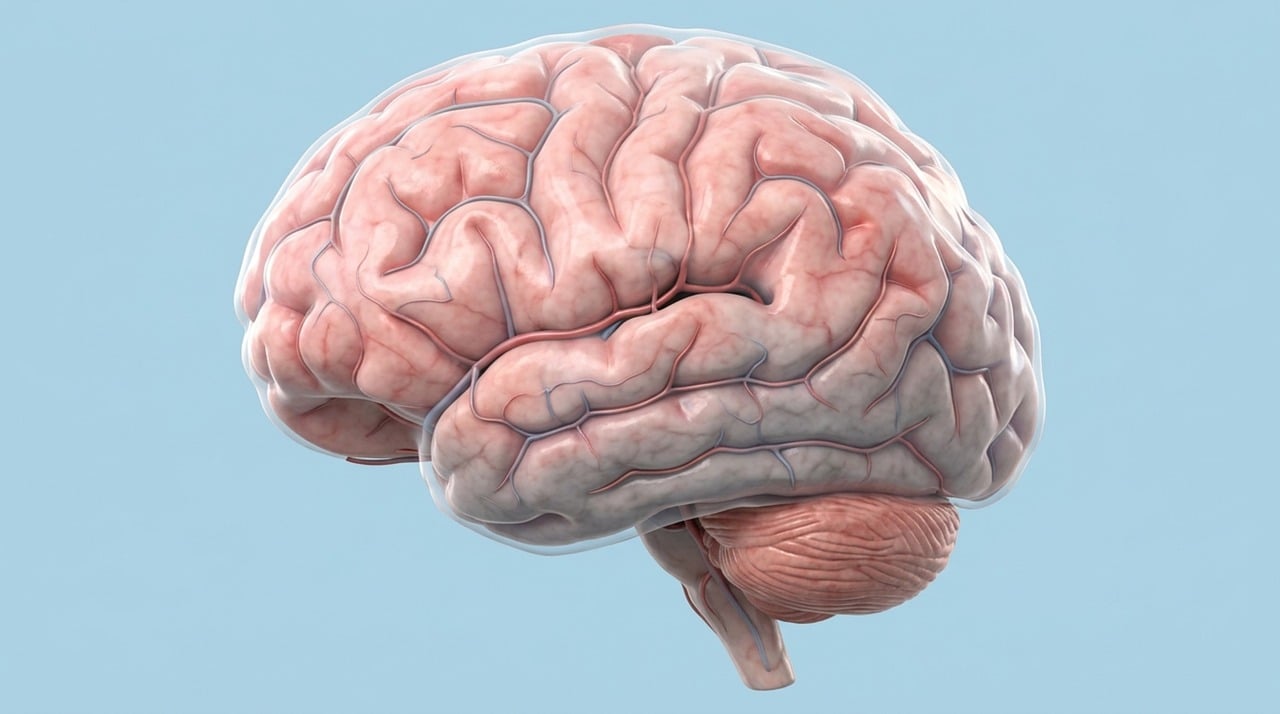
Important regions include the hippocampus, parahippocampal areas, rhinal cortex and other parts of the medial temporal lobe.
Research involving temporal-lobe epilepsy has been particularly important because some patients experience déjà vu immediately before or during seizures.
These observations have helped researchers connect déjà vu with temporal-lobe memory networks.
Studies of recognition memory also distinguish between brain systems supporting recollection and those contributing to familiarity.
This makes déjà vu a useful natural experiment for understanding how the brain decides that something feels known.
The Hippocampus and Memory
The hippocampus is one of the most famous structures involved in human memory.
It plays an important role in episodic memory, including the ability to remember experiences together with contextual information.
If you remember visiting a particular city, for example, your memory may contain information about the location, people, sights and circumstances surrounding the trip.
The hippocampus helps organize relationships between these pieces of information.
But déjà vu cannot simply be explained as "the hippocampus remembering something."
The phenomenon is more complicated.
Researchers distinguish between recollection and familiarity, and different medial temporal structures appear to contribute differently to these processes.
This is one reason scientists continue to investigate exactly how déjà vu emerges from interactions between these regions.
The Parahippocampal Region
Another important area is the parahippocampal region.
Research has proposed that abnormalities or unusual activity in this area can produce strong feelings of familiarity.
A classic neurological hypothesis proposes that déjà vu can occur when familiarity-related activity becomes temporarily disconnected from the processes that normally confirm whether an experience has actually been remembered.
In simple terms, the brain may generate the "I know this" signal without generating the corresponding "I remember when" information.
This idea fits observations from both cognitive experiments and neurological patients.
However, scientists continue to debate the exact mechanisms involved.
What Temporal-Lobe Epilepsy Reveals About Déjà Vu
One of the strongest clues about the neurological basis of déjà vu comes from temporal-lobe epilepsy.
Some people with temporal-lobe epilepsy experience déjà vu as an aura before a seizure.
This does not mean ordinary déjà vu is a form of epilepsy.
Most everyday déjà vu experiences in healthy people are brief and harmless.
Instead, epilepsy provides researchers with an unusual experimental opportunity.
When seizure activity affects specific temporal-lobe networks, patients can sometimes experience extremely vivid sensations of familiarity.
Studies of these patients have linked déjà vu to familiarity-related memory processes and medial temporal structures.
Research has found particularly interesting relationships between déjà vu and the rhinal or surrounding medial temporal regions involved in recognition.
These findings support the idea that déjà vu is deeply connected to memory circuitry.
Does Déjà Vu Mean You Actually Remembered the Moment?
Probably not.
The subjective feeling of remembering something is not the same as possessing an accurate memory of it.
Memory researchers have repeatedly demonstrated that familiarity and recollection can become separated.
You can recognize something without remembering its source.
You can also feel familiar with something that is actually new.
Déjà vu appears to exploit this distinction.
The experience can be incredibly convincing while still failing to correspond to a genuine memory of the current event.
Could Déjà Vu Be Caused by Similarity?
One influential explanation is that a new situation may resemble something from the past without being consciously recognized as the source of that resemblance.
Imagine walking into a hotel lobby you have never visited.
The arrangement of the furniture, lighting, doorway and staircase may accidentally resemble the layout of another place you once visited.
You may not remember the earlier location.
But the similarity could activate familiarity.
Experiments have provided support for this possibility.
Researchers have found that resemblance between a novel scene and a previously experienced scene can increase feelings of familiarity and déjà vu even when participants cannot consciously recall the original scene.
This is known as a similarity-based explanation.
It suggests that déjà vu does not require the brain to retrieve a complete hidden memory.
A partial structural match may be enough to produce the sensation.
Why a Familiar Layout Can Fool the Brain
The brain is constantly processing spatial relationships.
It recognizes patterns involving objects, distances, shapes and arrangements.
Two locations can therefore share a similar structural pattern even if their individual objects are different.
A new environment might contain the same basic arrangement as an old one.
For example, a doorway may occupy the same position relative to a staircase, while a table and window create a similar visual configuration.
You may not consciously remember the previous environment.
But your brain may still detect the similarity.
That unconscious similarity could contribute to the powerful sensation that the present scene has happened before.
Déjà Vu and Memory Errors
Memory is not a perfect recording system.
Every time we remember something, the brain reconstructs aspects of the experience.
That reconstruction process is extremely useful, but it also means memory signals can sometimes be misleading.
Déjà vu may represent a particularly interesting type of memory error.
The brain produces a signal associated with recognition, but another monitoring process detects that the recognition does not make sense.
The result is a strange state in which familiarity and novelty exist simultaneously.
Recent theoretical work describes déjà vu in terms of this type of conflict between subjective familiarity and the recognition that the situation is new.
This conflict-based perspective helps explain why people often experience déjà vu with a strong sense that something is familiar while simultaneously knowing that they have not actually experienced it.
The Brain's Error-Checking System
Human cognition contains systems that monitor whether perceptions, memories and decisions make sense.
When a familiarity signal conflicts with other information, the brain may detect the inconsistency.
This could explain an important feature of déjà vu.
You do not usually completely believe that the present moment literally happened before.
Instead, you experience the feeling of familiarity while recognizing that the feeling is probably wrong.
That awareness may be part of what makes déjà vu so distinctive.
Is Déjà Vu a Prediction of the Future?
Déjà vu can sometimes feel predictive.
A person may think they know what will happen next.
Because the situation feels familiar, the brain may create a subjective expectation that the next event is also known.
However, there is no established scientific evidence showing that ordinary déjà vu allows people to predict future events.
The sensation of knowing what comes next can itself be part of the familiarity experience.
In other words, the brain can generate a strong feeling of recognition without possessing genuine information about the future.
Is Déjà Vu Evidence of Past Lives?
Déjà vu has sometimes been interpreted through spiritual or paranormal explanations, including ideas involving reincarnation or memories from previous lives.
These interpretations may be meaningful within particular belief systems.
However, neuroscience does not require a supernatural explanation to account for the basic experience.
Known mechanisms involving familiarity, recognition, memory monitoring and temporal-lobe networks provide scientifically testable explanations.
There is currently no established neurological evidence demonstrating that ordinary déjà vu represents a memory from a previous life.
Is Déjà Vu a Sign of a Brain Problem?
Usually, no.
Brief déjà vu experiences are reported by healthy people and are generally considered a normal cognitive phenomenon.
The situation is different when déjà vu occurs unusually often, becomes prolonged or is accompanied by other neurological symptoms.
Because déjà vu can occur as an aura associated with temporal-lobe seizures, unusual recurrent episodes may sometimes warrant medical evaluation.
The important distinction is between ordinary occasional déjà vu and déjà vu occurring as part of a broader neurological pattern.
Why Does Déjà Vu Happen More Often to Some People?
People do not all experience déjà vu at the same frequency.
Researchers have investigated possible relationships involving age, memory, travel, familiarity with different environments and individual cognitive characteristics.
Some studies have found associations between déjà vu frequency and experiences such as travel, although the precise reasons for these relationships remain uncertain.
One possibility is that people who encounter many unfamiliar environments have more opportunities for partial similarities between new situations and previous experiences.
Another possibility is that differences in attention, memory monitoring or familiarity processing influence how often the sensation is noticed.
Why Does Déjà Vu Often Feel So Brief?
Déjà vu usually lasts only a short time.
This may be because it is not a complete memory retrieval process.
Instead, it may represent a temporary mismatch between different cognitive signals.
One system generates familiarity.
Another system evaluates whether that familiarity is justified.
Once the mismatch is resolved, the strange sensation disappears.
The result is an experience that can be intense but remarkably short-lived.
Déjà Vu Is Not the Same as Déjà Vécu
Scientists sometimes distinguish different types of déjà experiences.
Déjà vu literally refers to the sensation of having already seen something.
Déjà vécu refers more broadly to the feeling of having already lived through an experience.
This distinction matters because different forms of unusual familiarity may involve different cognitive and neurological mechanisms.
Some neurological conditions can produce much stronger and more persistent experiences than the ordinary fleeting déjà vu familiar to most people.
What Brain Imaging Tells Us
Neuroimaging research has examined the brain structures associated with familiarity and recognition.
Research across recognition-memory tasks indicates that familiarity and recollection involve partially distinct networks.
Medial temporal regions, including the hippocampus and surrounding cortical areas, are particularly important for these processes.
Some structural imaging studies have also reported differences in medial temporal and related brain regions between healthy people who frequently experience déjà vu and those who do not.
However, such findings should not be interpreted as proving that a specific brain structure causes every instance of déjà vu.
Correlation between brain structure and a reported experience does not automatically establish a simple cause-and-effect relationship.
Why Studying Epilepsy Helps Explain Normal Memory
Neurological disorders sometimes provide scientists with rare opportunities to study normal brain functions.
Temporal-lobe epilepsy is one example.
When electrical activity temporarily disrupts memory-related networks, some patients experience highly specific subjective sensations.
Researchers can compare these experiences with normal memory processes.
In some studies, patients with temporal-lobe epilepsy who experience déjà vu show selective problems involving familiarity assessment.
This supports the broader idea that déjà vu is connected to recognition-memory systems.
Can Scientists Trigger Déjà Vu?
Researchers have attempted to study déjà vu experimentally because spontaneous episodes are difficult to predict.
Some experimental approaches use similar scenes, virtual environments or memory tasks to create conditions in which participants report familiarity.
Neurological research has also investigated déjà experiences during direct brain stimulation in patients undergoing clinical procedures.
These approaches have helped identify temporal-lobe networks involved in the phenomenon.
However, experimentally induced familiarity is not necessarily identical to naturally occurring déjà vu.
That is one reason scientists remain cautious about claiming that a single mechanism has solved the mystery.
Could Déjà Vu Be the Brain Checking Its Own Memory?
One intriguing possibility is that déjà vu is partly related to the brain's ability to detect memory errors.
If the brain produces a familiarity signal that conflicts with the actual evidence, a monitoring system may identify the conflict.
In this interpretation, déjà vu is not simply a memory failure.
It may also reveal that the brain is successfully recognizing that something about its own memory signal is inconsistent.
The person experiences familiarity but simultaneously knows that the familiarity does not make sense.
This makes déjà vu particularly interesting from the perspective of metacognition—the ability to monitor one's own mental processes.
What Déjà Vu Reveals About Human Memory
Perhaps the most important lesson from déjà vu is that memory is not a single system.
We often talk about memory as if the brain simply stores experiences and retrieves them later.
Neuroscience shows something more complicated.
The brain must decide whether information is familiar, reconstruct contextual details, compare current perceptions with stored representations and monitor whether the resulting memory judgment is trustworthy.
Déjà vu appears to expose a temporary disagreement between these processes.
That makes it an unusually useful phenomenon for studying human cognition.
Could Déjà Vu Help Scientists Understand Memory Disorders?
Understanding how familiarity can become disconnected from accurate recollection could eventually help researchers better understand neurological and psychiatric conditions involving memory.
Researchers already study recognition memory in disorders affecting the medial temporal lobe.
Déjà vu provides another example of how subjective memory experiences can diverge from objective reality.
However, researchers should not assume that ordinary déjà vu is itself a disease or direct model of dementia.
It is better understood as a window into specific aspects of memory processing.
Why the Experience Can Be So Convincing
Human beings normally trust feelings of familiarity.
If a face looks familiar, we usually assume there is a reason.
If a location feels familiar, we naturally search our memories for an explanation.
Déjà vu becomes strange because the feeling is strong while the explanation is missing.
The brain says "known" while conscious reasoning says "new."
Because the familiarity signal is generated internally, it can feel just as compelling as genuine recognition.
Could Stress or Fatigue Affect Déjà Vu?
People often report unusual memory experiences during periods of stress, fatigue or altered attention.
These factors can influence cognition and memory processing.
However, it would be too strong to say that stress or sleep deprivation directly causes ordinary déjà vu in every case.
The relationship between everyday mental states and déjà vu remains an area where more controlled research is needed.
Déjà vu is probably better understood as the result of interacting memory and monitoring processes rather than as a simple response to one environmental trigger.
Why Déjà Vu Is Still a Scientific Mystery
Scientists have learned a great deal about memory and recognition, but déjà vu remains difficult to study.
The experience is spontaneous.
It lasts only seconds.
Researchers cannot easily predict exactly when it will happen.
Much of the evidence therefore comes from self-reports, laboratory simulations and neurological cases.
These methods provide valuable information but each has limitations.
A laboratory-induced feeling of familiarity may not perfectly reproduce naturally occurring déjà vu.
Similarly, déjà vu caused by seizure activity may involve neural mechanisms that differ from those responsible for ordinary experiences in healthy people.
The Most Likely Scientific Picture
The current evidence points toward a useful general model.
A new situation is processed by the brain.
Some aspect of that situation may resemble a previous experience, or memory-related processing may produce an unusually strong familiarity signal.
The brain then experiences the feeling that the situation is known.
At the same time, other cognitive processes recognize that there is no appropriate memory explaining the familiarity.
The mismatch creates the distinctive sensation of déjà vu.
This model is compatible with research emphasizing familiarity, memory errors and conflict monitoring.
It also fits evidence linking déjà vu to medial temporal and temporal-lobe systems.
But it should still be regarded as an evolving scientific explanation rather than a final answer.
What Scientists Still Need to Discover
Several important questions remain unresolved.
Why do some people experience déjà vu frequently while others rarely experience it?
Exactly which neural networks generate the initial familiarity signal?
How does the brain recognize that the familiarity is inappropriate?
Why does the experience sometimes include a strong feeling that the next event is predictable?
How closely does ordinary déjà vu resemble the phenomenon produced by temporal-lobe seizures?
And can researchers reliably reproduce natural déjà vu in controlled laboratory conditions?
Answering these questions could reveal much more about the architecture of human memory.
Conclusion: Déjà Vu May Be a Glitch in Familiarity, Not a Window Into the Past
Déjà vu feels mysterious because it creates a powerful contradiction inside the mind.
The present moment feels familiar even though you know it should be new.
Modern neuroscience increasingly points toward memory and recognition systems as the source of this strange sensation.
Rather than demonstrating that a person has literally experienced the future or remembered a past life, déjà vu may occur when the brain generates a familiarity signal that is not supported by an appropriate recollection.
Similarity between a new situation and something experienced previously may contribute.
Memory-monitoring processes may also play an important role.
Temporal-lobe and medial temporal structures, including regions involved in familiarity and recollection, are strongly implicated.
Research involving temporal-lobe epilepsy provides particularly important evidence that disruptions within these networks can generate powerful déjà experiences.
Yet scientists still do not have a single explanation that accounts for every form of déjà vu.
That uncertainty is not a failure of neuroscience.
It reflects the extraordinary complexity of human memory.
Every time we recognize a place, person or event, the brain is combining perception, stored information, familiarity, recollection and monitoring.
Déjà vu may simply be the moment when we become conscious of those normally invisible processes disagreeing with one another.
The next time you experience that strange feeling that "this has happened before," your brain may not be revealing a hidden memory at all.
It may be revealing something even more interesting: the machinery your mind uses to decide what feels familiar, what counts as a memory and whether you should trust that feeling.


